This column was originally posted by Gus at SkiPost.com.
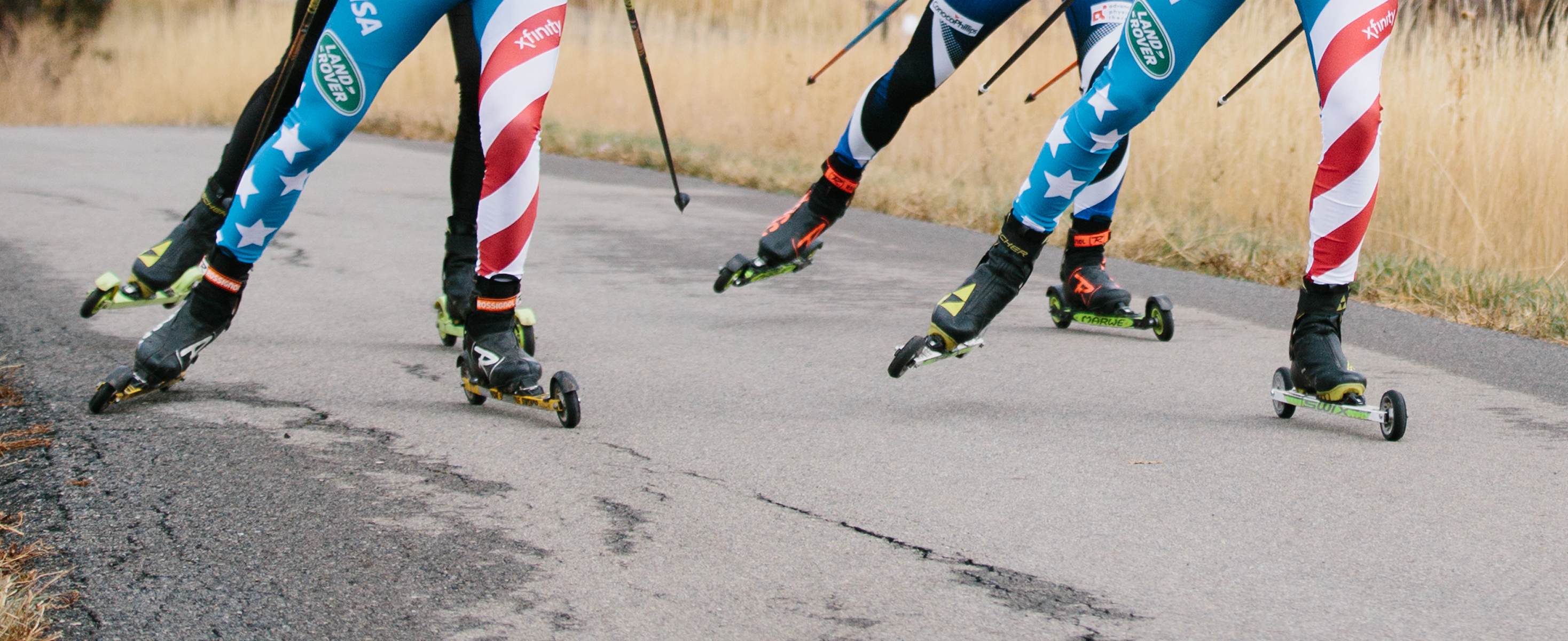
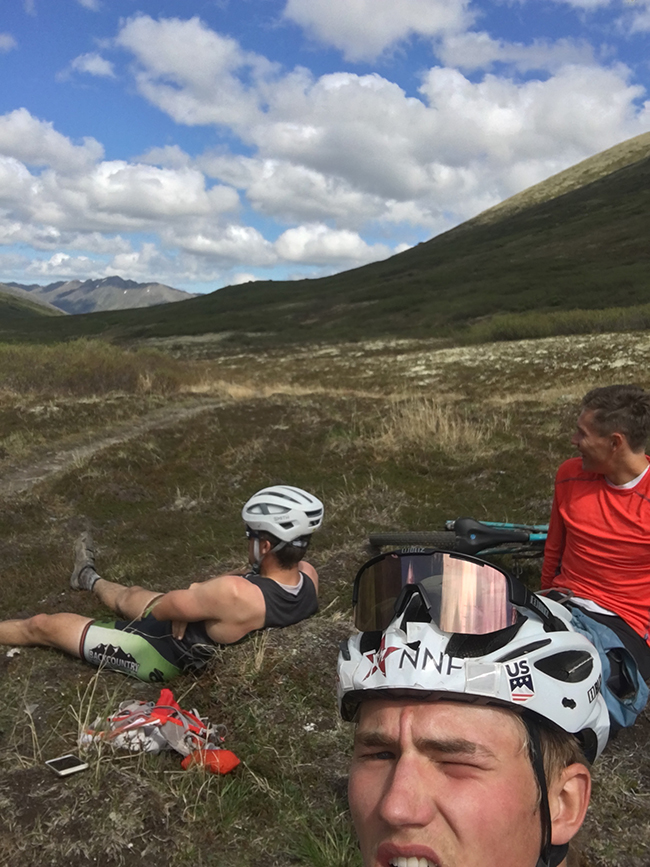
My last couple blocks of training have gone pretty well, with one setback called shin splints, caused by running too much early in the spring. It's been a little bit of a bummer to not run for the last month or so, but it hasn't impacted my training too much. It has also made me much more conscious of how careful you have to be when returning to full summer mileage. I've still been able to train well with biking and roller skiing, and it's made it so I can ride my new mountain bike more than I would, which is a nice silver lining! I even did mountain bike intervals one day for the first time ever. It's definitely a different feeling, you have to make sure you don't overload your legs too much so you don't just hit a wall and lose power. I still was able to breathe hard and get my heart rate up so I think it was a worthwhile session! Mostly, though, I've been doing my intervals on roller skis.
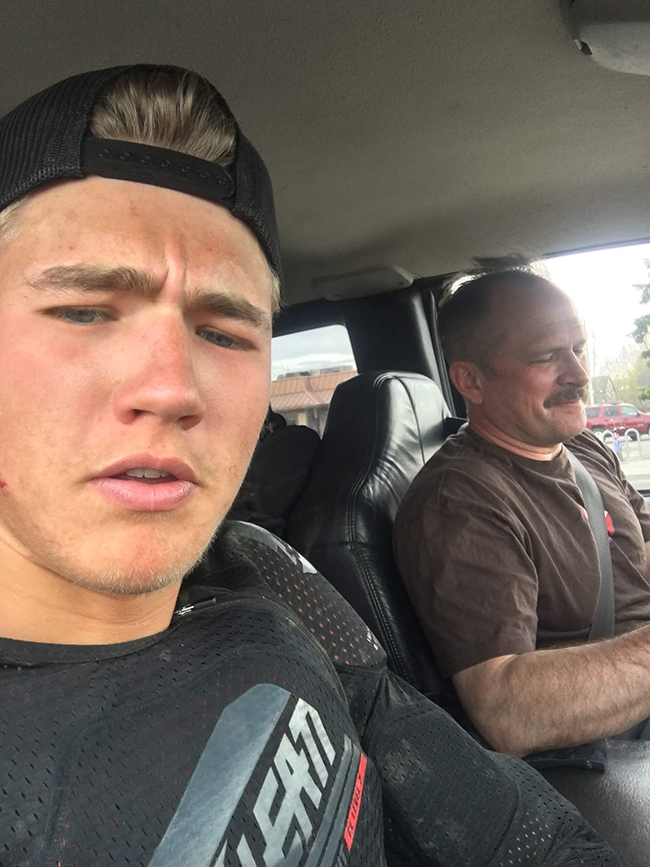
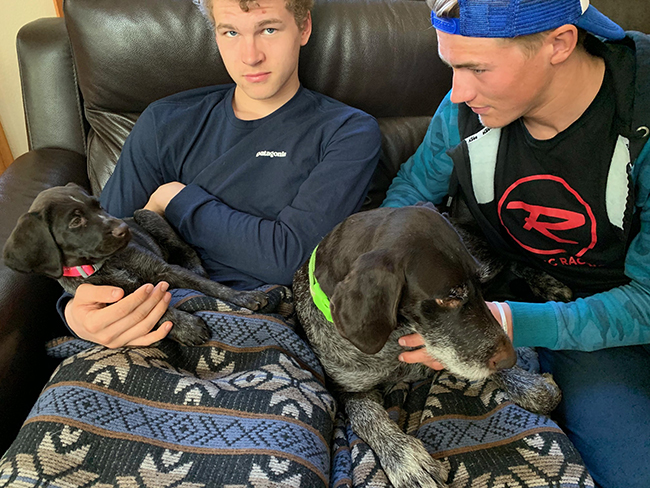
Other than that, I've still been riding motocross once or twice a week on easier weeks, hanging out with our new puppy, and working on a summer class, so I have plenty going on!
I'm really looking forward to getting back into running over the next several weeks, I just have to take it slow. I really do enjoy running, so it'll be fun to be back doing more hiking and bounding intervals. Other than that, I look forward to the next time I can see my U.S. teammates. Our U.S. Ski Team camp in Park City that was originally scheduled for June got moved back again to a tentative August date, which is kind of a bummer because I miss those guys that I haven't seen since the season ended. While I'd rather be able to hang out and train with them once in a while, there is something very nice about just staying in one place to train, especially if that place is home. It's been really easy for me to settle in and focus, while mixing training alone, with AWS, and with other friends also training here. That brings me nicely into my question of the month, which asks about doing intervals alone, and how to feel productive in those sessions.
SkiPost: Gus, Nordic skiers train many hours, and there are many times when skiers are training without their team or group.
What advice would you give for junior and young adult skiers who are doing intervals sessions on their own over the summer? How can they feel like they are putting in the effort when they don't have coaches around to push them or teammates to strive toward. How can athletes training alone feel like they are staying competitive, even when they don't have anyone to compete with?
While I think doing intervals with other people around the same speed as you can be very beneficial, I also think it is extremely important to do some interval sessions totally on your own. This makes it easier to focus on your own technique and pace, which are key things to be able to control in a race. Sometimes it can be hard to motivate or get hype when you're alone (hard things to fake!). Coaches and teammates are common ways to do this, but finding ways to hype yourself up for individual workouts is important, so you're not as reliant on a group. Personally, I like to watch video of good skiers before training, and I also like thinking about future races and how I want them to go. Those things get me fired up to train hard. One other hurdle is how you can feel competitive even without people around. A great way to do this is to find a hill or loop that you like for a specific interval set, and always do those intervals there. Comparing times is a way to be competitive against yourself and try to always get better. Set loops are also good if you're not as comfortable with pacing, because then you can see your changes in speed from interval to interval. One downside would be pressure to push too hard, but if you're aiming for a specific number of intervals, you won't be able to finish them with high quality if you go too hard!
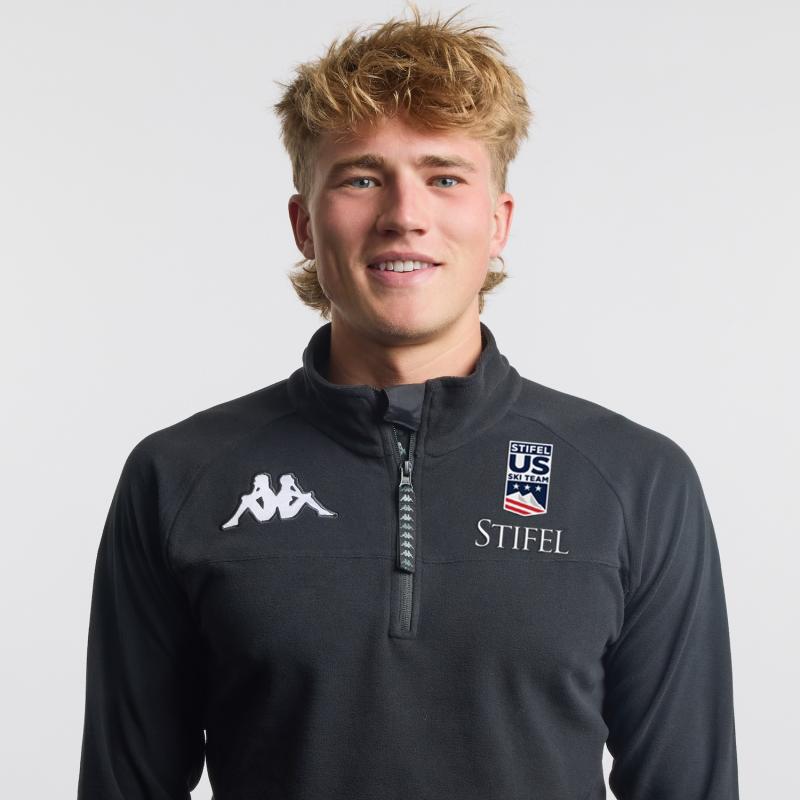
Gus Schumacher, originally from Anchorage, Alaska, has been on the Stifel U.S. Cross Country Ski Team since the 2018-19 season and is proving he is one of the fastest in the world. Coming off the Stifel Loppet Cup in Minneapolis, Gus won his first-ever World Cup in front of nearly 40,000 fans and became the youngest U.S. athlete ever to win a World Cup and the first American man to win a World Cup in over 43 years. Most recently, Gus was second in Falun, SWE, in the 20k skate - and notched the best day in history for the U.S.
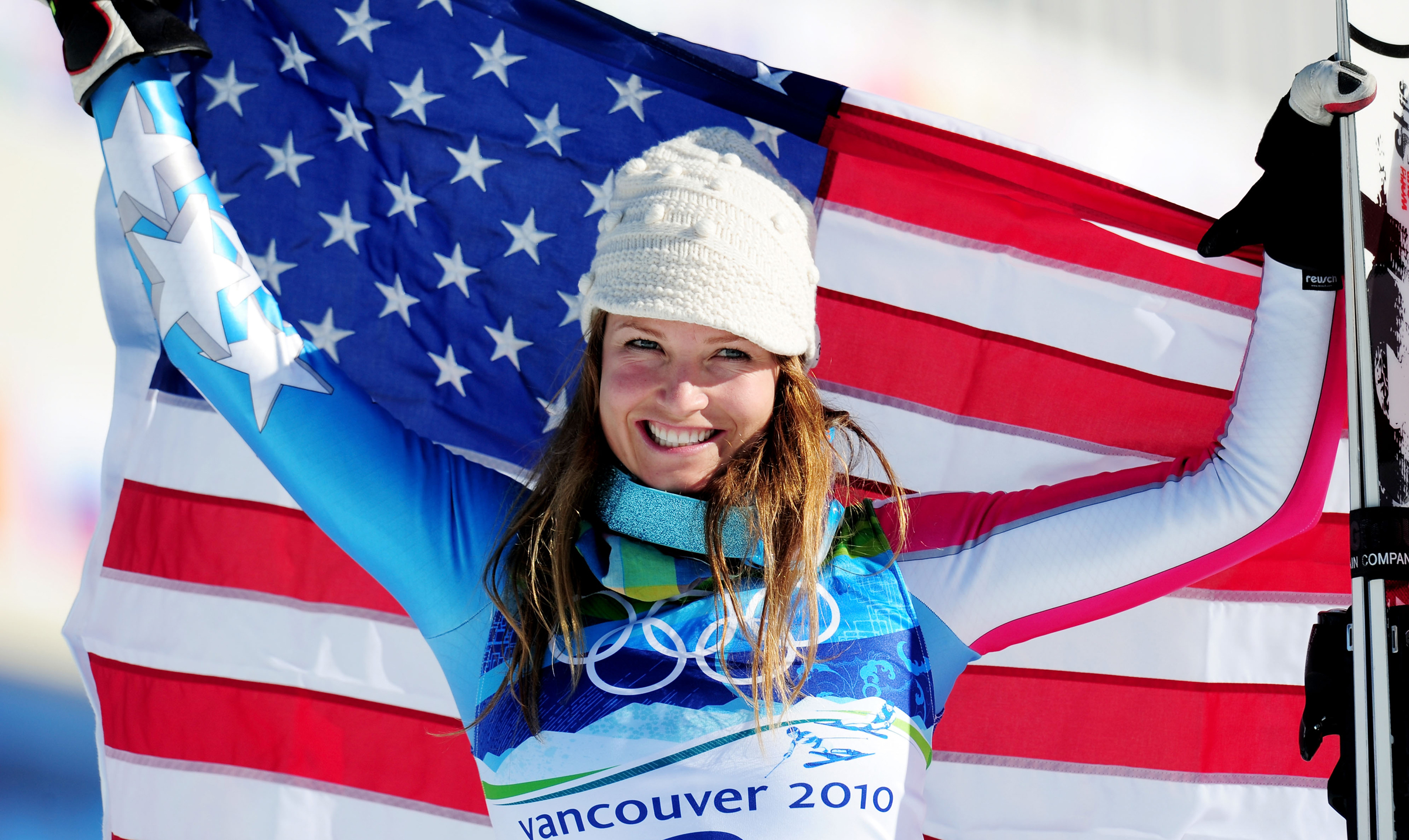
Olympic gold medalist Julia Mancuso announced her latest endeavor, a new podcast called "Just Be Yourself with Julia Mancuso," where Julia will "welcome you into my life in a unique way and I'm excited to take you guys along with me on this adventure as we share in this journey together. I want to support your journey toward the future you dream of as you create it." (Getty Images)
Olympic gold medalist and U.S. Alpine Ski Team alumna Julia Mancuso announced her latest endeavor, a new podcast called "Just Be Yourself with Julia Mancuso," where Julia will "welcome you into my life in a unique way and I'm excited to take you guys along with me on this adventure as we share in this journey together. I want to support your journey toward the future you dream of as you create it with unwavering determination."
The always fun-loving, wild, tiara-wearing woman, Julia was a young phenom—part of the famous 1984 birth year that included standout teammates and fellow Olympic champions Lindsey Vonn and Ted Ligety. Growing up in Squaw Valley, California, Julia was inspired by the spirit in the Olympic Valley, host of the 1960 Winter Olympic Games. Each day she passed the Olympic rings going to and from school.
For Julia, success came quickly, as she grabbed five junior world championship gold medals and three bronze medals—across four disciplines. She raced her first World Cup when she was just 15-years-old and made her first Olympic team in 2002 at 17 in Salt Lake City, Utah. Nagging hip pain as a result of hip dysplasia would eventually force Julia to retire just before the 2018 Olympic Games, but she would do so in style, at the site of her first career FIS Ski World Cup super-G victory in Cortina d'Ampezzo, Italy...wearing a superhero cape, dressed as "Super Jules".
Full of ups and downs, Julia's career was nothing short of exciting. She kept the mood light, was a big event performer who pulled out all the stops on the biggest stage of them all, donned a tiara on the Olympic podium, danced, smiled and had fun. In doing so, she won more Olympic medals than any American woman in alpine skiing, with four, and grabbed five FIS Ski World Championship medals. She has also stood on the world cup podium 36 times and started in 398 world cup races.
Of her new venture, Julia wrote in her Instagram announcement, "Stay tuned as I'll be making an announcement in the next couple of days about how you can be involved in the show. Until then, stay true to yourself and get ready for the adventure to begin!"
Shiffrin Returns to Snow at Copper for First 2020-21 Training Camp
By Megan Harrod
June, 19 2020
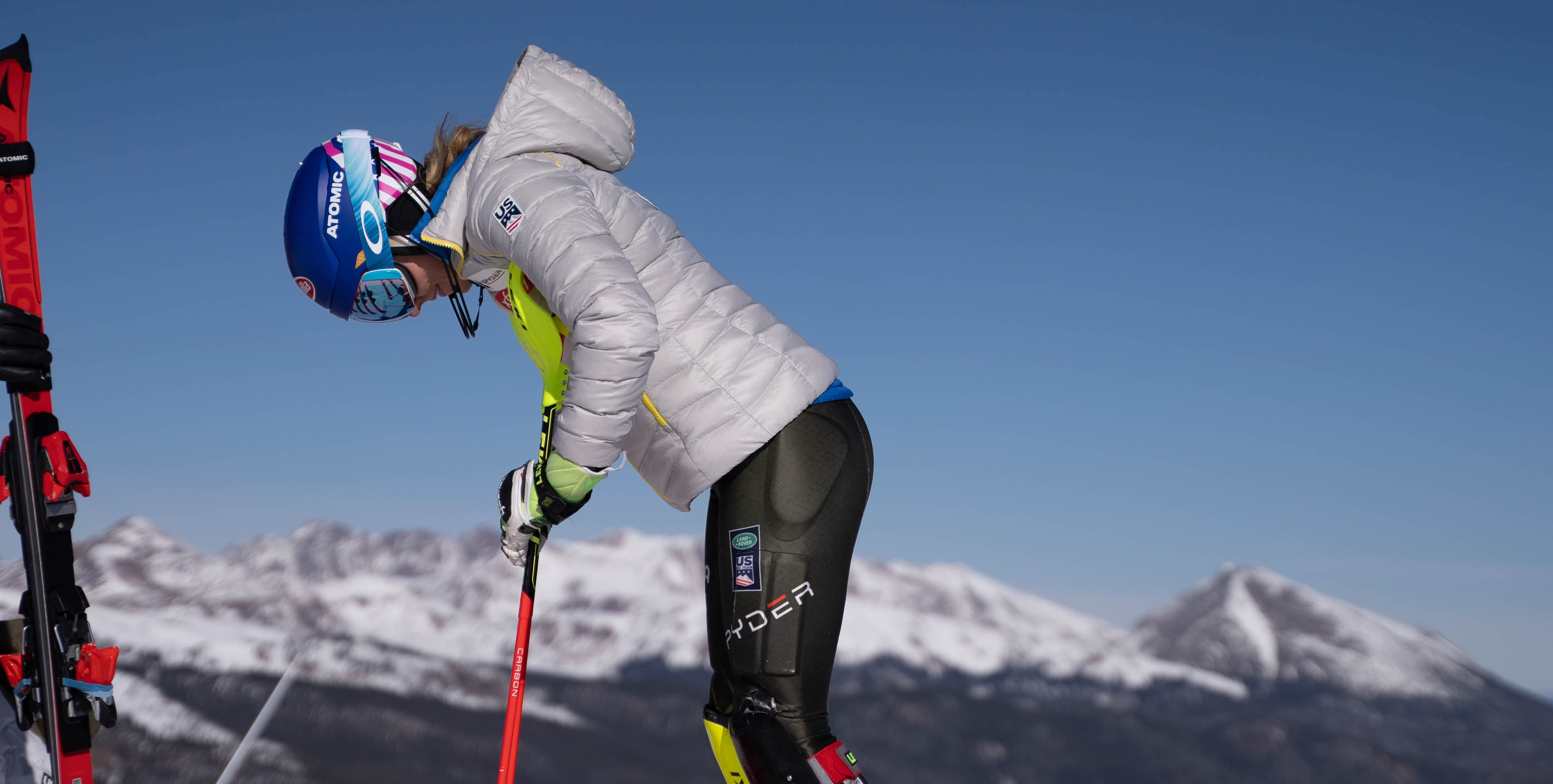
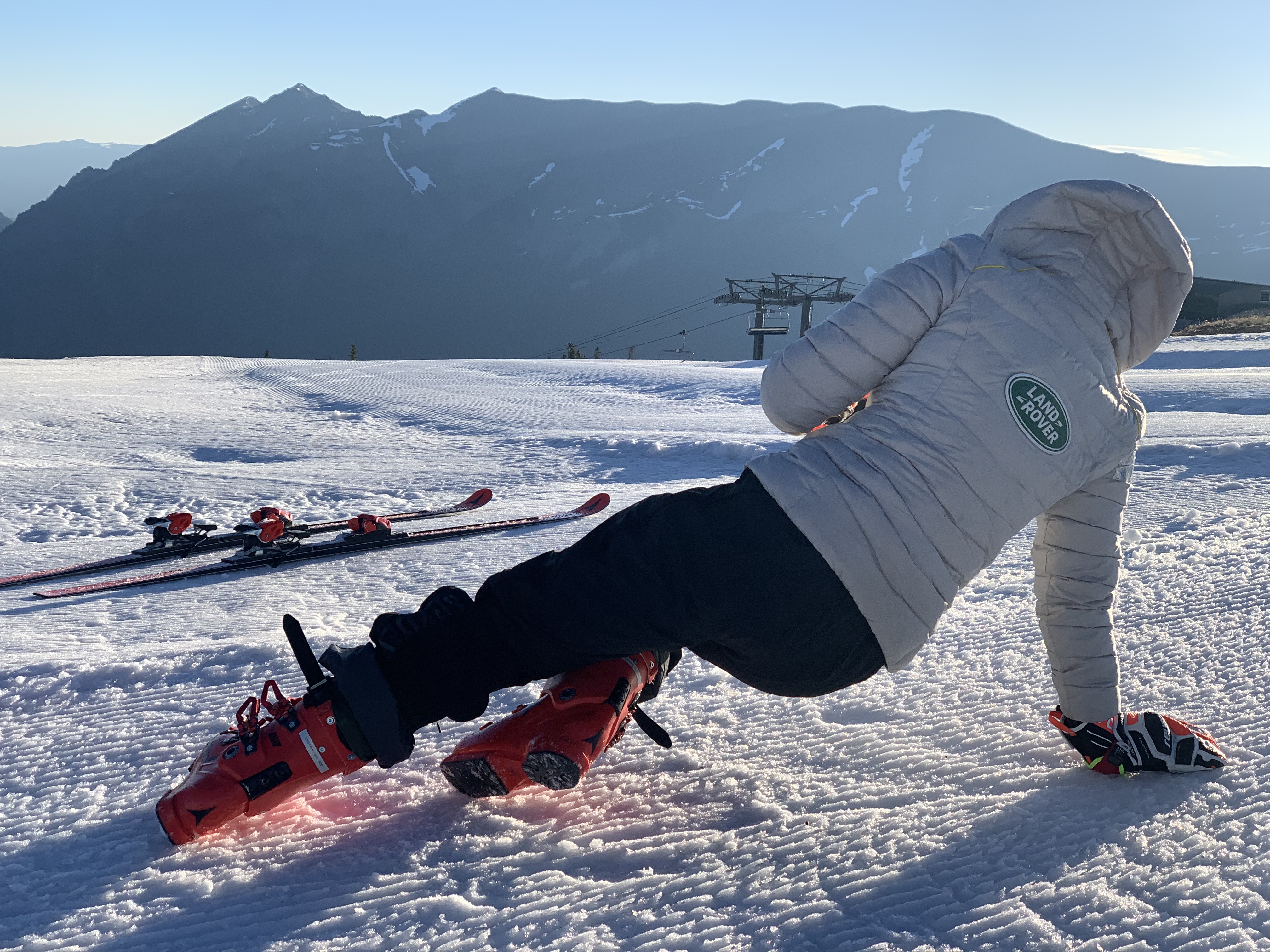
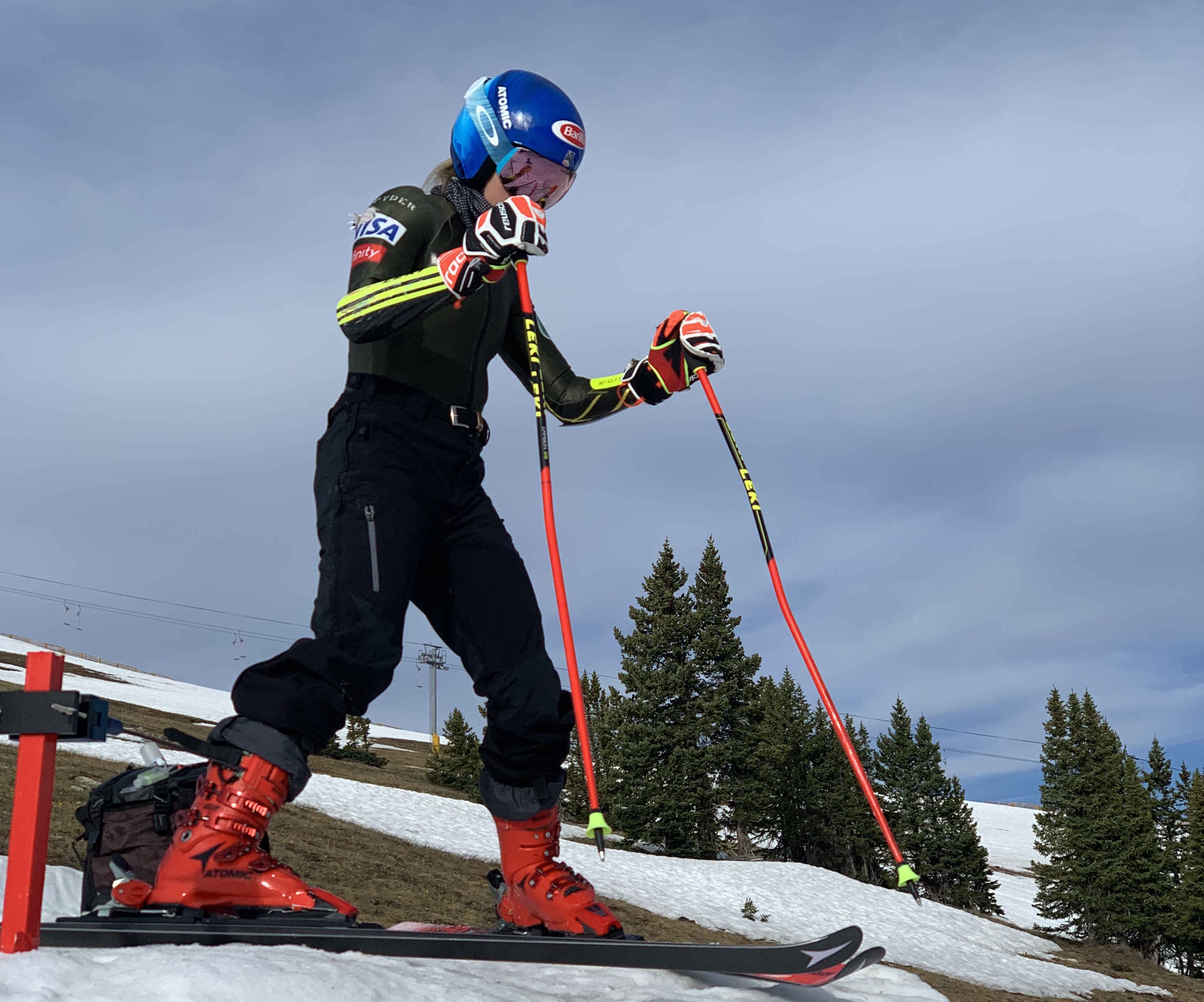
Two-time Olympic champion Mikaela Shiffrin returned to snow in early June at Copper Mountain, Colo. for the first prep period camp of her 2020-21 season. (Max Hall - U.S. Ski & Snowboard)
Though the time away from the mountain was challenging for Land Rover U.S. Alpine Ski Team athletes, there was one athlete, in particular, who made the most of the time away—spending some much-welcomed time with her family, settling into her new normal as the “CEO” of her brand as she dove into learning about finance and accounting, giving back to charitable causes for COVID-19 relief, launching her involvement with her new foundation, Kindness Wins, raising $41,000 through the All In Challenge with a HomeLight Killington Cup VIP package benefitting those faced with food insecurity during the pandemic, and working closely and tirelessly with U.S. Ski & Snowboard on a future fundraising campaign that will benefit all U.S. Ski & Snowboard athletes across all sports...all while dancing, singing, AND staying fit in her home gym. That would be two-time Olympic gold medalist Mikaela Shiffrin, of course.
Following the tragic passing of her father in February, Mikaela spent more than a month at home in Edwards, Colo. with her family. She returned to Europe in early March in hopes of stepping into the start gate for one final FIS Ski World Cup event prior to the end of the season, in a place that personally meant a lot to her—Åre, Sweden. That hope would soon be shattered, as the races were cancelled and the season cut short due to COVID-19. Mikaela’s world had stopped in February, but the entire world came to a screeching halt in March when the global pandemic hit.
Even so, Mikaela would get on the plane from Europe back home, feeling a sense of gratitude for how far she had come. As she told the New York Times in March while still in Åre, “If nothing else, I’m grateful that we came this far, even with the races canceled. So I got to get out there for that training session with full intentions of preparing for a race and skied with that intensity. I accomplished that, and that was all I had set out to do.
“It was maybe in the long term even better that I didn’t step into the start gate and have to deal with the mental challenges of knowing that the overall title was still in the cards,” Mikaela added, “because the competitor in me probably would have come out and said, ‘I care about the results,’ even though that was never my focus.”
Fast forward to June, and, after months of waiting, Mikaela would get her chance to return to the mountain, just a short drive from her home at U.S. Ski & Snowboard Official Training Site, Copper Mountain, Colo. After weeks of planning and time spent creating COVID-19 protocol, led by U.S. Ski & Snowboard High-Performance Director Troy Taylor and Lead Physical Therapist Gillian Bower, along with team managers, staff, and beyond, athletes were finally able to return back to snow. And, how sweet it was!
“Returning to snow was—it’s difficult to describe, truthfully—because it was really amazing,” reflected Mikaela’s Head Coach, Mike Day. “It was something that was so refreshing like I haven’t really experienced in my career. In my career, there was not a time where we had no option to ski, so when we were finally able to get back on snow with everything going on in the world and COVID, it was really special,” he added.
Perhaps the extra time off snow gave athletes and staff an even greater sense of gratitude for their return to the mountain and the sport they have so much passion for, which is reflected in Mike’s sentiments about the camp. “We can’t begin to thank Frank Kelble and Copper enough for the effort they put in to produce great venues, safe venues—both with protection with b-net but also with social distancing measures and really well-thought-out planning,” commented Mike. “They did an excellent job in all capacities to make sure we had great training and were safe.”
U.S. Ski Team athletes are accustomed to descending upon the U.S. Ski Team Speed Center at Copper Mountain for training camps in October and November with supreme conditions, but this June camp was a unique opportunity for the team, with conditions that surpassed expectations of both athletes and staff.
“The conditions really surprised us—they’ve been remarkably good and we couldn’t be happier,” admitted Mike. “We were excited to go skiing, but our expectation was not extremely high with what we would get for quality, and we’ve had extremely high-quality training. It has been mostly freeze-thaw snow, but it’s pretty spectacular to not be above treeline, but to actually be in the trees, and be in a familiar place.”
The variable conditions provided for some productive training sessions. “We’ve had a couple of days that were warmer than others, which has also been something that we needed to focus on with Mikaela, on softer, salted conditions—which has been a nice balance,” added Mike. “And we’ve had some extremely hard snow as well, so we’ve been able to cover a variety of conditions and produced really good high volume and quality with access to the Excelerator lift and such a quick turnaround. It was a really good venue to work with at this time of year, and we were lucky to accomplish all that we did.”
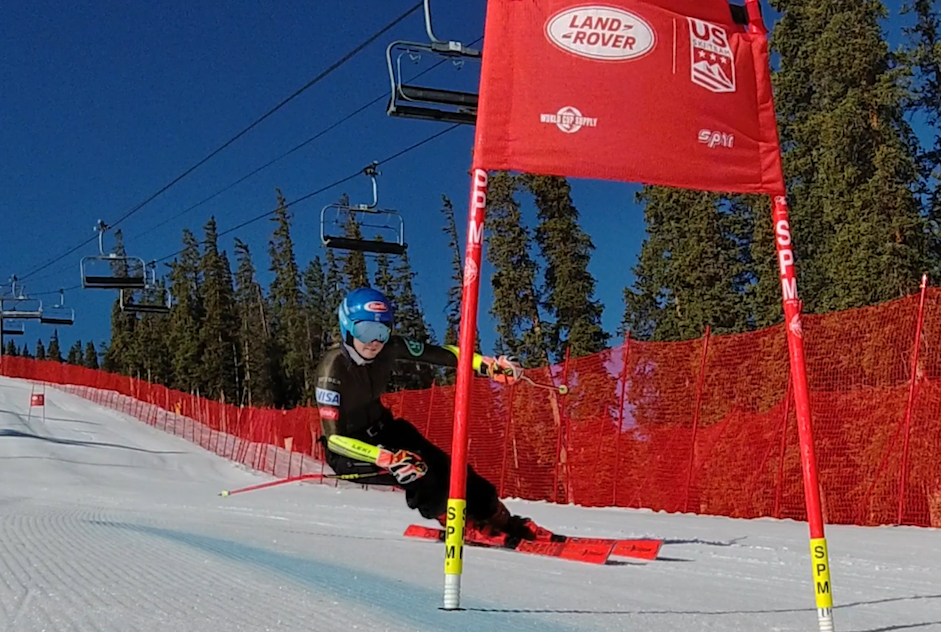
Having not been able to build into the prep period as they had originally planned, the focus of this camp was really fundamental. Mikaela’s focus was fundamentals in both slalom and giant slalom, with giant slalom being the primary focus. “We’ve been able to get good volume done in both events,” said Mike. “Same focus points we’ve worked on in the past, but it provided us a little bit better of an environment to be able to work through them. I was excited to see the level that Mikaela brought back to snow. She was immediately skiing at a very high level, which was nice to see, in both events.”
While the entire staff wasn’t able to travel (notably Jeff Lackie) due to COVID-19 restrictions, U.S. Ski & Snowboard’s Western Region FIS Coach Fletcher McDonald stepped up to fill in the gap, along with Green Mountain Valley School’s (GMVS) Charlie Powell, which was definitely a welcome addition to the group.
“Fletcher McDonald has been able to be with us, and not only has he been amazing and a great fit, but he can do massive amounts of work—but it’s also nice to have someone from within the organization. I would thank Fletcher, as well as Bill Gunesch [Western Region Development Director] and Chip Knight [Alpine Development Director]—it was just nice that we were able to get him in. I think it was a special experience for him, but equally rewarding for us,” he added. “Then, Charlie stepped into the role of serviceman for this camp, which has been amazing, and he’s also a really fluent coach, so he’s been able to do a number of things on the hill as well as take care of the skis. So it’s been really incredibly seamless and really high-level execution, so it’s been great.”
For Mikaela, returning to the mountain, while being able to stay in the comfort of her own home as she and her family adjust to their new life without their dear father and husband, was so special. “It felt amazing to be back on snow after having the longest time off skis that I can remember in my career,” reflected Mikaela. “I wasn’t sure how it was going to feel after such a long time and with everything going on in the world, but I am so thankful to have had the opportunity to spend some time training on snow, as I realize so many people in our country hardly have the chance to even get outside right now and the damage that is doing emotionally and mentally is beyond words.”
“Of course there are still so many unknowns we’ll have to navigate moving forward in this ‘new normal,’ but I really can’t thank Copper, the U.S. Ski Team, and my team enough for working together to create great training conditions that led to a really productive camp,” she added. “Many of our competing nations have had access to on-snow training over the last weeks and will continue to have access throughout the summer on the glaciers, while some competitors were never forced to go off-snow at all, and still some have yet to touch their skis to snow, and may not have the chance until the fall or winter...so I am incredibly grateful to be among the athletes who have been able to practice on snow for any amount of time at all.”
In terms of what’s next...it’s really unknown at this point. Head Women’s Coach Paul Kristofic said, “We’re keeping all options open and we have multiple plans in place, and all of them are driven by our ability to travel and travel safely.” Currently, said Paul, the women’s team has plans that are all domestic, plans that are based in Europe, and those in the Southern Hemisphere “which are definitely challenged at the moment.” He added, “The number one priority is to do it safely and number two is to be able to capitalize on the best training we can get safely, so that may turn out to be a domestic Mt. Hood program for the summer.”
U.S. Ski & Snowboard sanctioned training camp attendance is optional. U.S. Ski & Snowboard athletes and staff should not feel pressure to travel to train. All sanctioned training camp policies and protocols are subject to change based on local, state, and federal public health orders, updated guidance from the USOPC, or updated U.S. Ski & Snowboard policies.
Gus Schumacher, originally from Anchorage, Alaska, has been on the Stifel U.S. Cross Country Ski Team since the 2018-19 season and is proving he is one of the fastest in the world. Coming off the Stifel Loppet Cup in Minneapolis, Gus won his first-ever World Cup in front of nearly 40,000 fans and became the youngest U.S. athlete ever to win a World Cup and the first American man to win a World Cup in over 43 years. Most recently, Gus was second in Falun, SWE, in the 20k skate - and notched the best day in history for the U.S.
College Ski Racing and the U.S. Ski Team: Another Perspective from a U.S. Ski Team Alumna
By U.S. Ski & Snowboard
June, 19 2020
U.S. Ski Team alumna Heidi Voelker, who was a 12-year member (1985-1997) of the U.S. Ski Team, shares her perspective on the collegiate ski racing and U.S. Ski Team relationship. (Jack Arrix)
One of these individuals is alumna Heidi Voelker, who was a 12-year member (1985-1997) of the U.S. Ski Team. Heidi wrote this piece in response to a Ski Racing Media article, USST, NCAA butt heads over NorAm schedule.
--------------
I am writing to express my opinion on the recent articles about the development differences between the USST and NCAA. I am a three-time Olympian and have been involved in this sport for over four decades. I am also the parent of a first-year FIS athlete, who will one day have to make a choice in this regard (if he is fast enough to be in that position).
Choices are always difficult, we make them every day, yet they come with trade-offs. Skiing for the National Team or a college program are very different; they both require exceptional talent and speed. The rewards for success and risks are also different between the two. The path you take depends on your goals and ambition. There is no wrong path, but you will be forced to choose and in so doing, you will be faced with trade-offs. Some say you can do both, I disagree. Are their exceptions? Yes. But, if your measure of success is defined by World Cup, World Championship or Olympic podiums, the success rate through college racing is very low and data backs this up.
Prior to the inception of the World Cup tour in 1966, college skiing was the path to the World Championships and Olympics. Once the season long World Cup tour was established, governing bodies around the world had to adjust and because of competitive forces, the path to these events changed.
When I ask young children, who ski race what their goals or dreams are, they say “I want to ski in the Olympics, my dream is to win a Gold medal”. I have never heard “My goal is to ski for a certain college”. That’s not a knock, it’s just the way it is.
The World Cup is the highest level of competition that we have in skiing. It takes sacrifice, effort, talent and ultimately speed to achieve success. The mission of the National Team is to develop competitive athletes that win races, World Championship and Olympic medals. Especially Olympic medals, because that’s their currency of currency, their funding is based upon it.
The USST path is a full-time job. You compete against other athletes from other countries that train year-round. If you don’t, you are at a huge disadvantage and that compounds every year that you are not on that path. The USST has their development process, while not perfect, it again provides funding for athletes on the D and C teams, which was sorely lacking over the last five years and something that helped me in my career. To make the team is great, but the goal of the program is to have skiers on the A Team, competing for podiums. That’s the truth; the tip of the spear is sharp and not always accommodating to athletes that can’t perform to this level.
This process requires solid progression and can’t take more than five years to show results, given funding limitations. Talent can be identified and progressed; however, some athletes will not make the next step and the Team is forced to make decisions. This is a risk with this path, not everyone who makes the National Team leaves happy. But if you have the speed it’s your path to ski at the highest level of this sport and achieve Olympic dreams. There are great skiers like the Phil and Steve Mahre, Tamara McKinney, Bode Miller, Lindsey Vonn and Mikaela Shiffrin who have gone this path, stood on podiums-making a trade-off, forgoing college.
There is a lot of discussion around having the National Team accommodate the college schedule. The National Team needs to build their schedule for the benefit of their athletes. 90% of these races are on foreign soil. In the U.S. our highest level of racing is NorAm. In Europe, they have Europa Cup and World Cup. U.S. athletes must be able to adapt to living and racing in Europe. It is very rare that an athlete can show up in Europe, learn the lifestyle, be comfortable, and be competitive right away. It takes a couple years for this to happen.
That means that the D and C team athletes must compete over there. Our NorAm races are preparation and test events for the D and C team athletes. Ultimately, they need to compete in high level FIS and Europa Cup races in Europe and make their mark there, so NorAms need to be scheduled before the races in Europe or later in the season which conflicts with the college schedule.
College ski racing is a cool experience. Being able to ski race for four years at a great college or university and walk away with a degree is a great opportunity. With that said, the educational requirements, testing and workload are demanding and when you add alpine training, NCAA rules and the college calendar they simply do not align with the requirements of competing at a high level on the World Cup. Comparing other college sports and the progression to the pros is not accurate; there are so many differences in international ski racing and the countries that are represented. People just need to come to grips with this fact.
The College path is an excellent option for athletes who don’t want to go the National Team route or for those who have been with the national team for two to three years but did not make the next level. NCAA Division 1 is very competitive and a spot on any team is not easy to achieve, even if you are trying to migrate from the National Team. College ski racing is very rewarding; my brother and sister took this path and they loved their experience.
In the end, all athletes need to understand which path is the best for them. There are trade-offs and sacrifices with both, as well as unique experiences. While each path requires a high level of commitment, the body of work are different, and choices must be made.
— Heidi Voelker
Former U.S. Ski Team Member
College Ski Racing and the U.S. Ski Team: My Perspective on USST, NCAA
By U.S. Ski & Snowboard
June, 19 2020
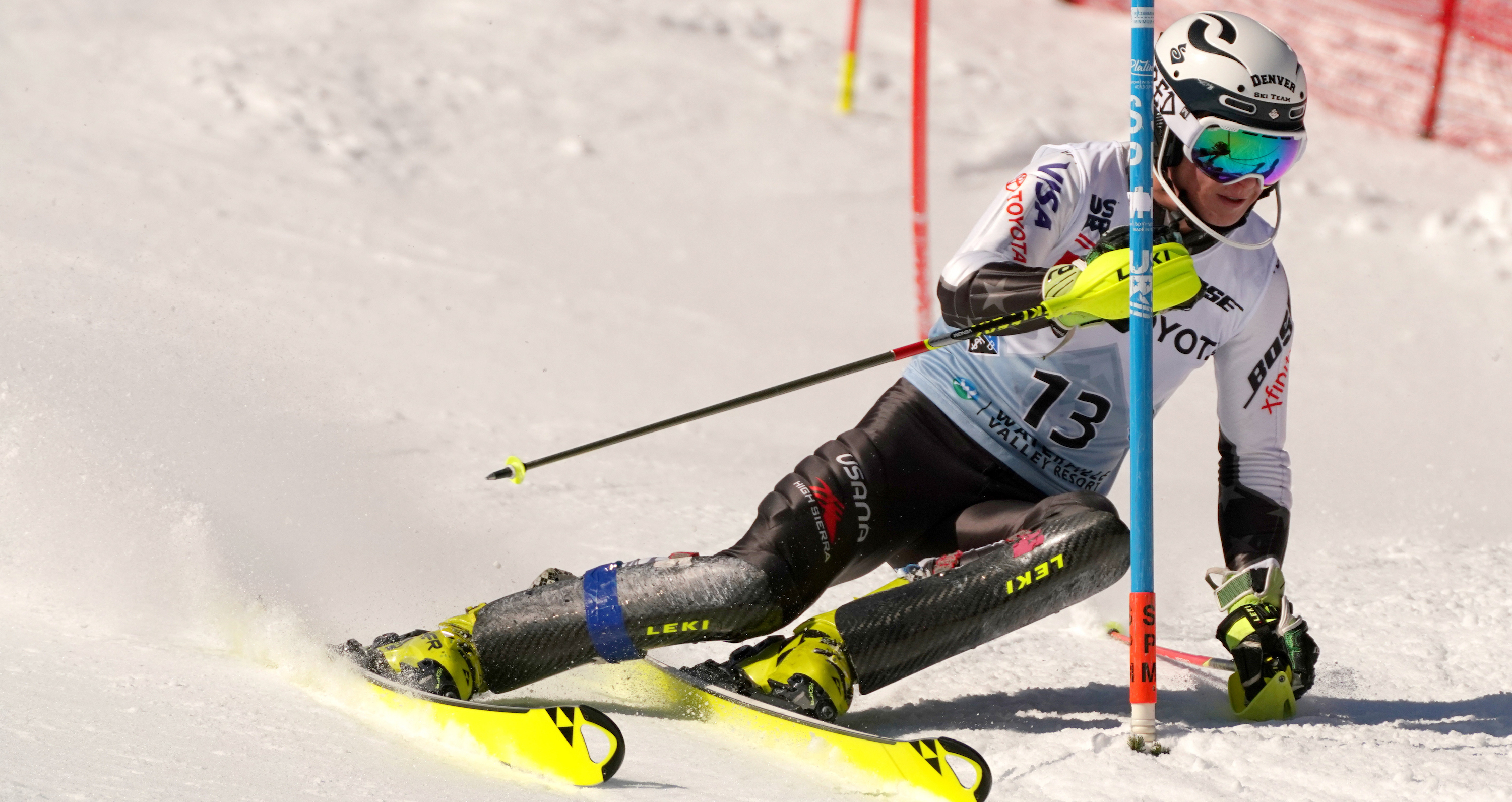
U.S. Ski Team B Team athlete and 2019 NCAA slalom champion, who currently attends Denver University, Jett Seymour weighs in on his experience skiing for both the U.S. Ski Team and DU.
One of these individuals is current U.S. Ski Team B Team athlete and 2019 NCAA slalom champion, who currently attends the University of Denver (DU), Jett Seymour. Jett wrote this piece in response to a Ski Racing Media article, USST, NCAA butt heads over NorAm schedule.
--------------
The United States Ski Team and their view on college skiing has been a very controversial topic for years. From my perspective it is a very interesting conversation that is more complex than coaches and administrators make it seem. First, I would like to say that I agree with both sides of this article and both have valid points. However, as in most controversial issues; both make points that I disagree with and have a different view based on my experience.
Let’s first talk about the NorAm schedule, the premise of this article. NorAms are designed to create a platform for the best athletes in North America to make it onto the World Cup and hopefully become successful at the highest level of competition. That being said, the NorAms must cater towards the schedule of the World Cup skiers. This past season, watching some of the top skiers in North America such as Simon Fournier, River Radamus, and Brian Mclaughlin race world cups was an absolute treat. However, competing on the World Cup is difficult; everything must go right on your one run down the course in order for you to make it into the top 30 and be able to compete in the second run. Rarely do we see someone like Lucas Braathen break into the top 30 world cup start list their first-year racing World Cup. There will always be athletes that will make it look easy, but, there are also athletes that have shown so much speed but just need one little thing to go right for them to make a huge break through and that might take a year or two of racing World Cup. But athletes must race NorAms in addition to World Cups in order to keep FIS points low and ensure a second year on the World Cup circuit. When the NorAms are scheduled over top of the World Cup races, North American skiing as a whole is making it harder on the athletes to succeed at the highest level in the sport. “The NorAms serve multiple roles, but that one is absolutely critical because without serving that role, our athletes have no pathway to the top in the world,” said Shaw. “And that’s our job, as the people who run the national team” (Ski Racing Media). I completely agree with this quote and I think that Tiger Shaw has a very good point. Europa Cups do not overlap with World Cups for the most part, so why should NorAms?
Can college skiing be a part of the “pipeline”?
This is a difficult question. In my experience after going through this process of using the college circuit as a viable option to make it to the World Cup there really isn’t a right answer to this question. Multiple athletes have proven that it is possible, but I don’t think there are a lot of people that really understand exactly how hard it will be. First, there is the challenge of making it onto a college team fresh out of high school, which is hard; the level of skiers on the college circuit is high. Second, being able to improve your skiing in college is more difficult than it would be with the USST. I was lucky enough to be able to train and travel with the USST the whole time I was in college and without that access to World Cup level training, I would not have had the success that I have had. However, I think that if I were to skip college and go straight to the USST I would be in a different place in my career.
College provided me with the opportunity to really find who I was as a human. I left high school with very little knowledge about skiing, tuning, ski set ups, and ultimately the real world. I was able to learn so much about skiing that I do not think I would have learned if I didn’t have to take full ownership of my skiing career. However, I had two pretty bad seasons in a row and I really struggled mentally and physically. I was so programmed from my younger years to take as many runs as possible and to just keep skiing that I ended up hurting myself more than helping myself, mainly during early season. It takes a unique person to be able to thrive in college and embrace the struggle, learn from all the mistakes, take the lessons you have learned and apply them to your career. Going the college route is not for everyone. Going straight to the USST I think is for sure the easier route and if there are the right coaches and athletes, for your career in my opinion, I think it would be more beneficial. In my case, the first year on the team, there were still team fees and the financial strain of skiing was still falling on my shoulders. I was able to alleviate that while getting an education, which was a no brainer. I was a little boy when I went to college; I weighed 145 pounds at most and was immature. In my specific scenario attending college was the best option at the time and I wouldn’t change the way I did it at all. The amount of effort you put into the route you choose to go determines how much you are going to get out of it. At the end of the day, the effort I put into workouts is the same at the University of Denver as it would be with the USST, the turns I make training with the University of Denver are still the same ones I would make with the USST, and the dedication I have to the sport remains the same no matter where I am skiing.
One point in the article that I thought was a little unfair is about the “frantic athlete”: an athlete willing to sacrifice it all in order to be top 10 in the world. According to the article by Ski Racing Tiger Shaw said an athlete with other goals or aspirations is probably an athlete that should not be involved with the U.S. Ski Team. [See Ski Racing notation below] I had the opportunity to talk with Tiger Shaw about these quotes and he defined a “Frantic Athlete” a little differently: someone that has always had their eyes set on making the next step at each level of the sport. As in, moving from winning NorAms to winning Europa Cups and World Cups. Still, in the world we live in you must be one of the best racers in the world to make any sort of money from ski racing. When I was stressed out and unsure of the path I chose, that inherent ambition to be the best in the world was crucial in reminding me why I do what I do. However, often we are only training four hours a day—with recovery or a lift, five, maybe six hours. The other hours can be used for anything that you want, so having other goals and aspirations should be encouraged. Obviously having a full class load is a stressful way to fill those hours and racing in Europe is hard to manage, but having something to give your mind a break from ski racing is important.
I am extremely grateful for the opportunities to race on the NCAA circuit along with representing our country. I think us athletes need to remember how lucky we are to have ski racing be part of lives. Ultimately, there is no right answer on what the best options for athletes is because it is very specific to each athlete and I think that all parties should support skiers that show potential. At the end of the day good skiing is good skiing and good skiing can be made into fast skiing.
Gus Schumacher, originally from Anchorage, Alaska, has been on the Stifel U.S. Cross Country Ski Team since the 2018-19 season and is proving he is one of the fastest in the world. Coming off the Stifel Loppet Cup in Minneapolis, Gus won his first-ever World Cup in front of nearly 40,000 fans and became the youngest U.S. athlete ever to win a World Cup and the first American man to win a World Cup in over 43 years. Most recently, Gus was second in Falun, SWE, in the 20k skate - and notched the best day in history for the U.S.
Land Rover U.S. Alpine Ski Team Concludes Tech Camp at Mt. Bachelor
By Megan Harrod
June, 17 2020
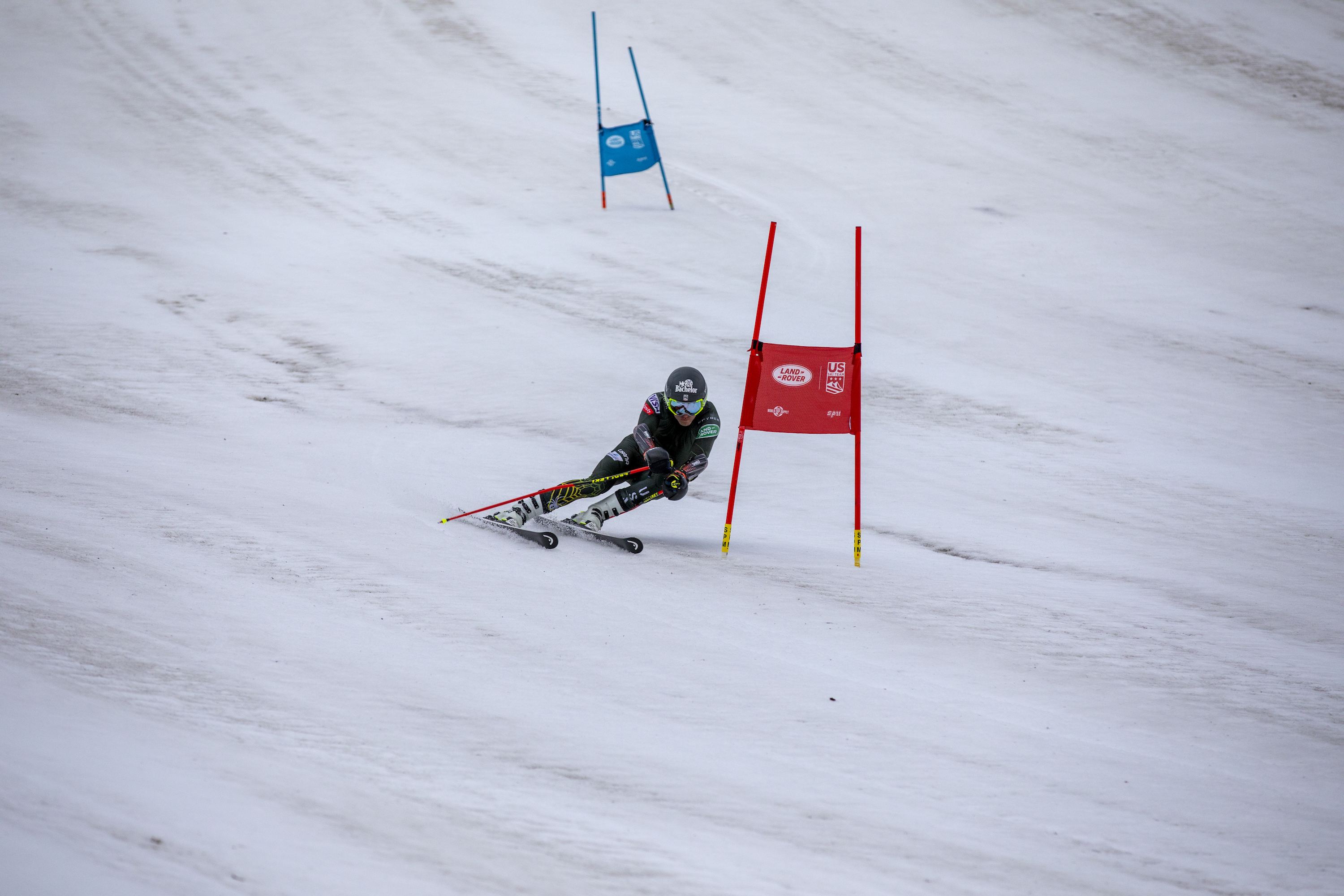
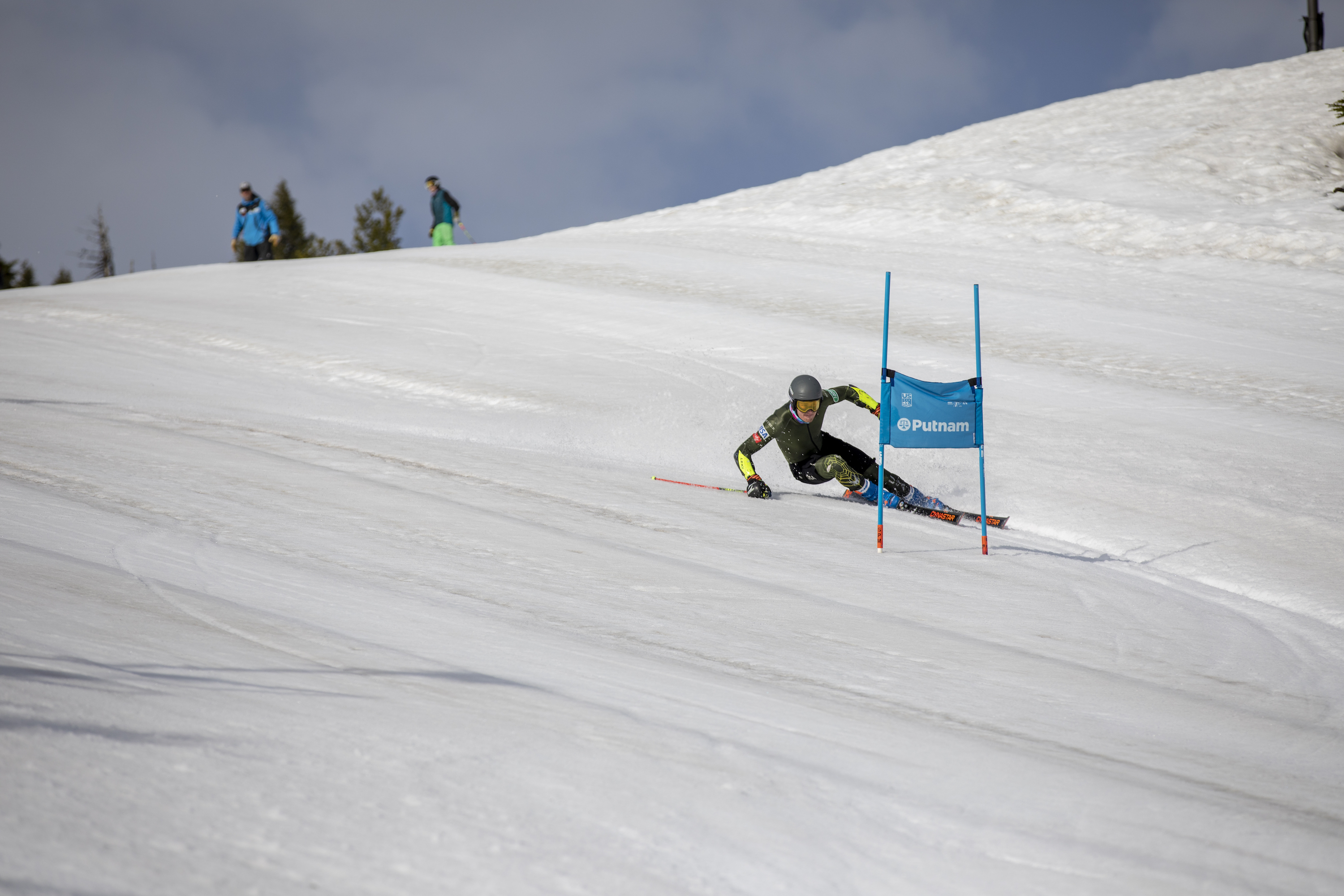
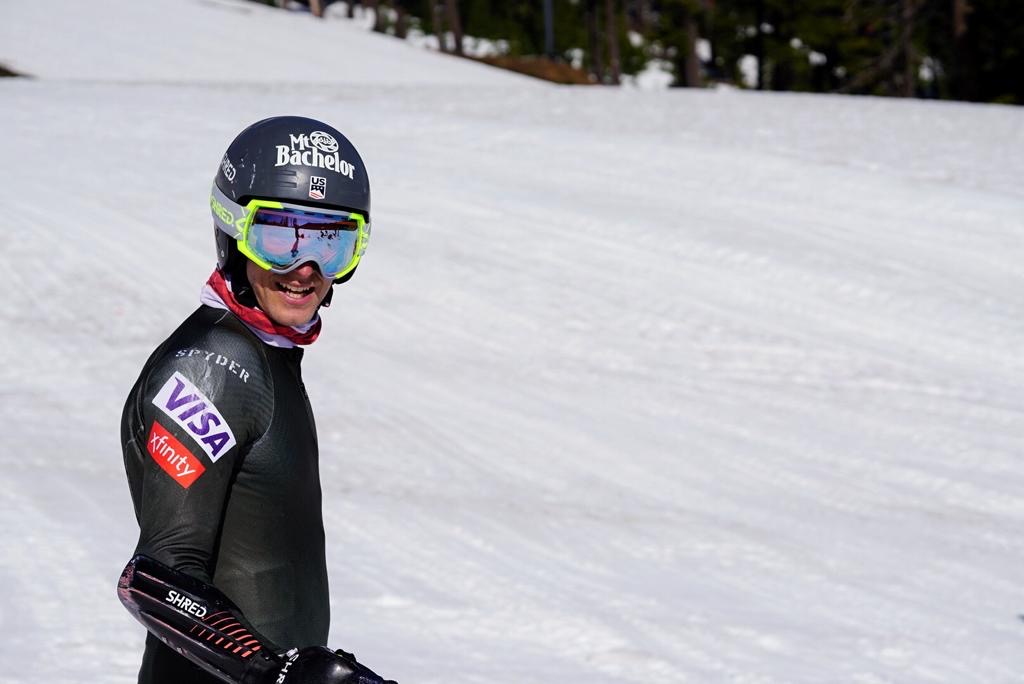
Starting with the Land Rover U.S. Alpine Ski Team in early June, U.S. Ski & Snowboard worked closely with several domestic ski areas, including Mt. Bachelor, to coordinate unique summer on-snow training camp opportunities for its national teams. Bend, Ore. hometown boy Tommy Ford was stoked to get back on snow at his home hill. (Photo courtesy of Mt. Bachelor)
Starting with the Land Rover U.S. Alpine Ski Team in early June, U.S. Ski & Snowboard worked closely with several domestic ski areas, including Mt. Bachelor, to coordinate unique summer on-snow training camp opportunities for its national teams.
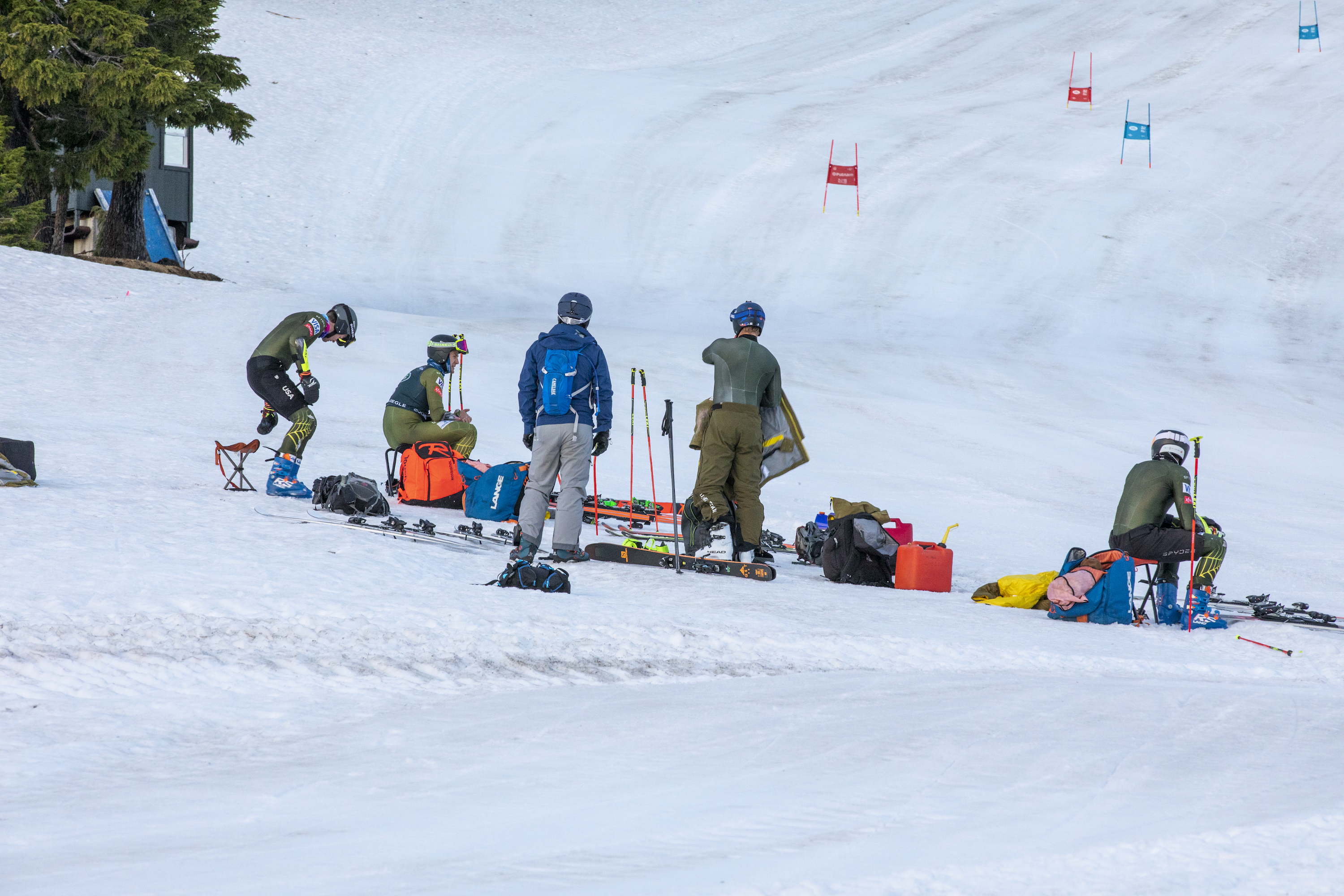
Members of the men’s World Cup technical team—led by Forest Carey, including two-time Olympic champion Ted Ligety, Olympians Tommy Ford and Ryan Cochran-Siegle, and World Junior medalists/up-and-comers Ben Ritchie and Luke Winters—hit the snow at Mt Bachelor, in Bend, Ore. for a 10-day giant slalom and slalom camp.
All sanctioned U.S. Ski & Snowboard training camps are subject to a rigorous set of criteria adhering to local, state, and federal public health orders as well as the United States Olympic and Paralympic Committee (USOPC) return to training guidelines to ensure the safety of its athletes and staff.
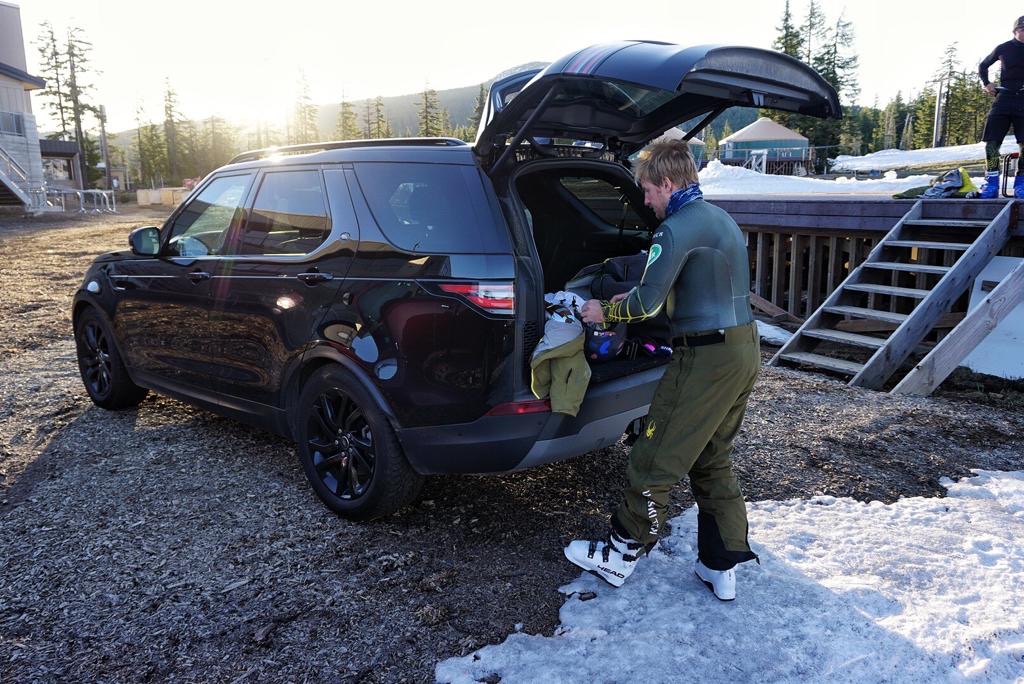
Working closely together with Mt. Bachelor Sports Education Foundation (MBSEF), Forest and assistant coaches Ian Garner, Ryan Wilson and Will Courtney conducted a successful 10-day camp, with early morning training and World Cup-like conditions. MBSEF Executive Director John Schiemer and his team, including Alpine Director Nils Eriksson, were psyched the guys were there and helped Forest and the team immensely. Each afternoon, athletes received physical therapy at Rebound’s West Clinic. Rebound is an official medical provider for the U.S Ski & Snowboard Team.
“The athletes were engaged, excited, motivated—it was a really nice environment. The local community was welcoming and really helpful,” Forest emphasized. “Brett Gingold, the doctor who was on the ground, made everything happen and provided a lot of local knowledge, and helped us feel safe.” Forest also mentioned how helpful the MBSEF crew helped, including driving snowmobiles while the athletes were lapping. “We were fortunate the mountain was closed, so we were training with snowmobiles,” said Forest. “There was very little demand for accommodation so we had spacious accommodations...it was a good way to kick off having camps. It worked out pretty smoothly.”
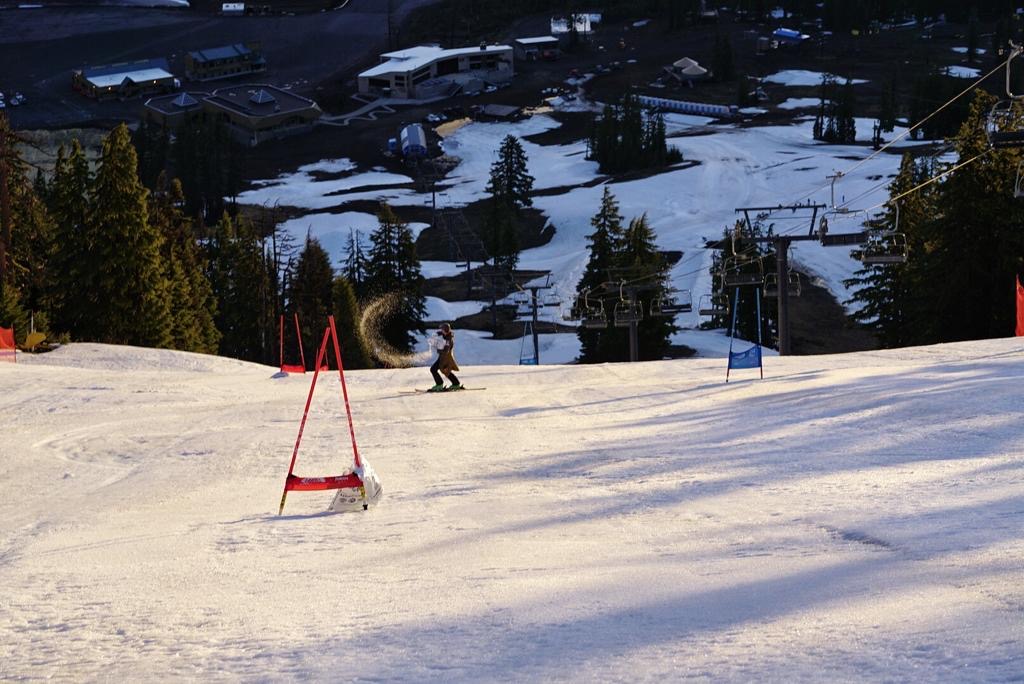
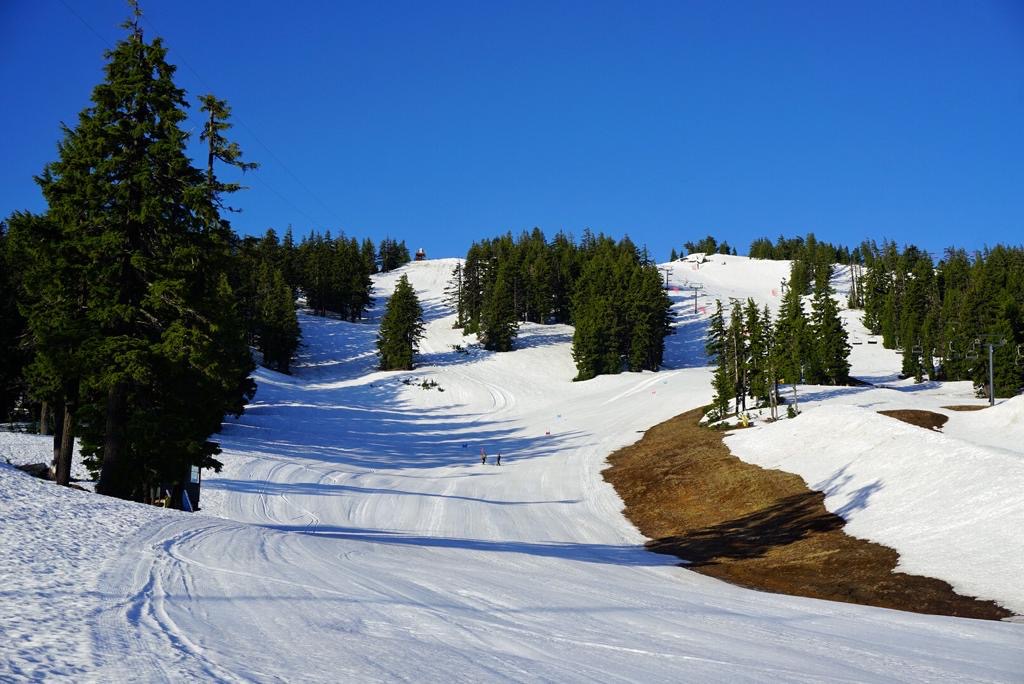
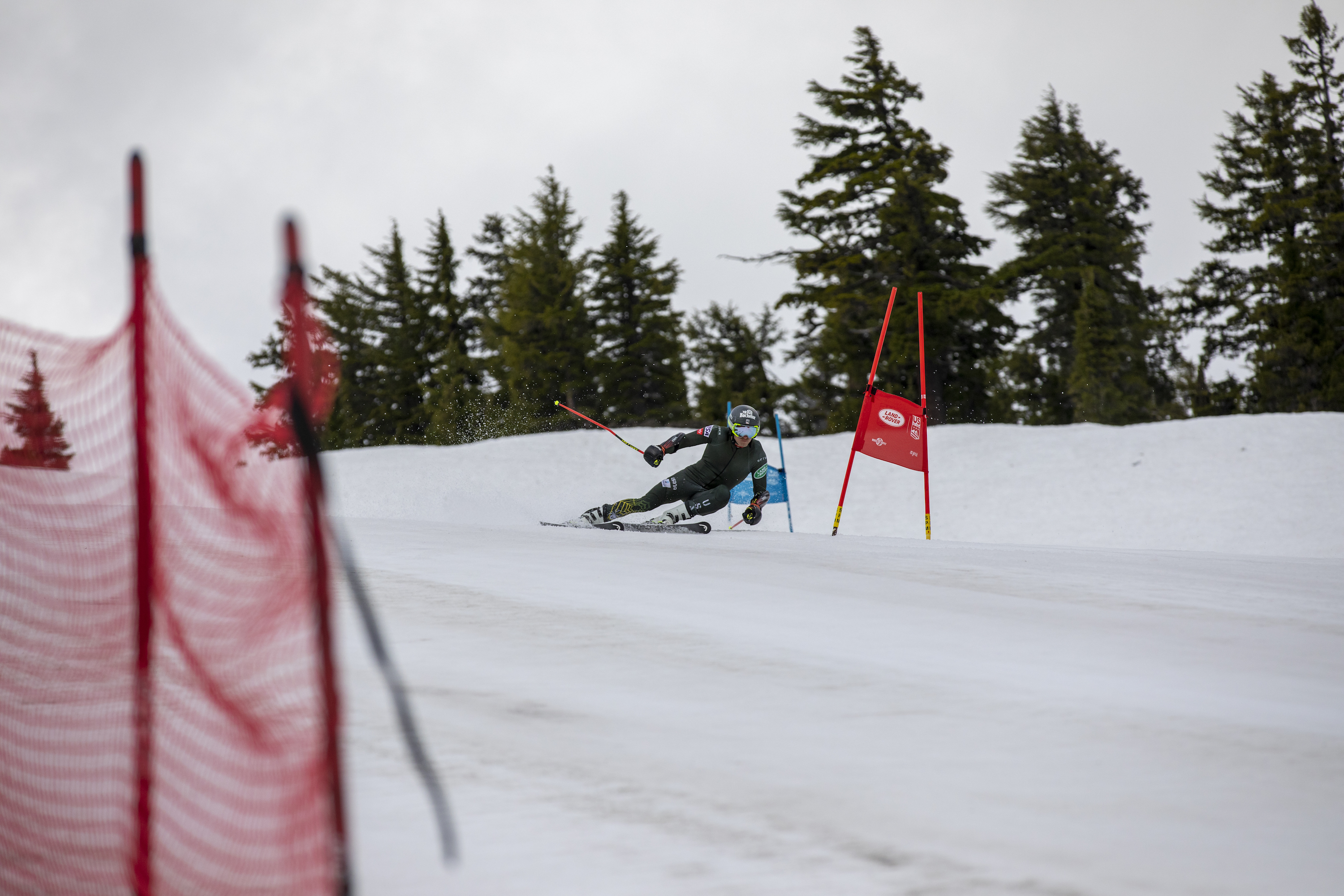
In total, the men skied for 10 days, with eight days of giant slalom training and two days of slalom training when the weather was less than perfect. “It’s a really nice trail—it’s like a 55-second GS, with really nice terrain,” Forest added. “They got about 60 runs in the camp. We also did two days of slalom when the weather wasn’t as good. Working on the normal stuff. It was nice to get out there this time of year for a little experimenting and try to get the pressure above the fall-line, and powerful turns. Each guy was able to try that out with their feelings and with input from each other. We salted pretty much every day, getting up there very early, so the snow was fine.”
With the salted snow, Oregon local (Gresham) Luke Winters, mentioned the conditions were much like many of the World Cups this past season. “The training and conditions at Bachelor were a bit northwest-wet and variable, but the salt worked and we were able to get some quality training on a great hill. As far as I'm concerned, the conditions were similar to most GS World Cups this year.” World Cups like Yuzawa-Naeba, Japan, Alta Badia, Italy, Garmisch, Germany, and Hinterstoder, Austria, all had that springlike, salted surface.
Ryan Cochran-Siegle, who just came off of the best season of his career on the World Cup, was relieved to get back on snow in some capacity with their small group. “The last time any of us was on snow in a serious training environment was back at the beginning of March when we were at the time preparing for Kranjska Gora [Slovenia],” Ryan said. “All of a sudden, our season ended like the flip of a switch and for a short moment, skiing was put on the back burner to return home safely and learn how to be a part of a new social-distancing world. To be back on snow again after everything we have all been through was a refreshing feeling. At the same time, it also felt a little like tiptoeing through your house in the middle of the night. It’s all familiar territory to be skiing again, but not everything is experienced in the same light right now. COVID precautions added to the detail we put in place with our training and housing environments, but eventually, it became close to normal over the course of a few days of getting used to.”
Bend, Ore. hometown boy Tommy was stoked to get back on snow at his home hill when it reopened at the end of May, saying that “Returning to snow to gates for the first time since early March was lovely. Didn't skip much of a beat. Skiing at Bachelor when it reopened at the end of May really helped get my ski feet back on.”
“Mt. Bachelor let us train on Thunderbird, the main run, that has a nice gradual break over with a consistent pitch that breaks over again just before a compression and trail turn that leads into an off-kilter false flat then gradually turns,” Tommy said. “It was a dream come true to train on that hill with my team! We had some early mornings and some salty days. I feel like we were all able to learn and improve our skills.”
Ryan was quick to mention they knew the privilege it was to be at Mt. Bachelor and they all took it seriously in order to get the most out of the opportunity. “We also had a great daily dialogue and communication among athletes and staff that helped offer different perspectives between us from which we learned extensively. Fortunately, we had close to perfect terrain for our needs thanks to Mt. Bachelor who gave us full reign of Thunderbird while there. Easily the best trail I’ve ever skied at Mt. Bachelor, as it’s still the only trail I’ve ever skied at Mt. Bachelor,” he added.
Though Luke admits the break in the spring due to COVID-19 didn’t feel as long as it was, he says it was good to get back on snow and is thankful for the solid training in his home state of Oregon. “Being an Oregonian, it was nice for Bachelor to open up and keep me as local as possible,” said Luke. “Training on the same hill I spent a lot of time on as a kid brought back some fun memories and it was good to do it with fellow U.S. Team athletes this time around. Hopefully, we can make it an annual trip. Thanks to Mt. Bachelor and MBSEF for all the help.”
Luke’s focus during the camp was on giant slalom. “This next season I want to ski as much GS as I can and work on being a two event tech skier in the coming years,” he commented. “Taking my slalom fundamentals I have been focusing on in the last year and transferring what I can to GS.” Tommy’s focus was “on activating and utilizing my inside ski while also doing all the other stuff well too. The other stuff being, staying out over the ski and rotated out with my shoulders as the forces build. Strong move down the hill at the top of the turn. In slalom, working to use the skis like a trampoline rather than skis. That was interesting.”
As for Ryan, his focus for the camp was on discovering the right cues to get him back where he was at the beginning of March. “For me, this included driving over the front of the ski at the top of the turn, disciplined level upper body through the apex with strong lateral outside half core engagement, and sticking with my bottom half to finish the turn, upper body following my lower body,” he said.
All of the athletes shared similar sentiments of gratitude for the training opportunity, and Tommy commented, “A big thank you to Mt. Bachelor, MBSEF, our dedicated snowmobile drivers, Rebound PT, Boss Sports Performance, my parents, and the U.S. Ski Team. It really takes a village.” Ryan added, “Thank you to all of the supporters, volunteers, staff, medical team, teammates, Rebound Therapy, Mt. Bachelor, city of Bend, and U.S. Ski and Snowboard for making such a great first camp possible! There was a crazy amount of hard work and jumping over hurdles that went into making it happen and we are all just so incredibly thankful and appreciative that it did!”
Finally, the time together in Mt. Bachelor in what has been a tumultuous time in the world, as protests against social injustice abounded across the country, gave the team time to have thoughtful and serious discussions about what was going on in the world. “As a final note,” added Tommy, “although we were back on snow and stoked for some sense of normalcy, we recognized, as a group, that ‘normal’ is changing and we were having daily discussions about Black Lives Matter, policing, and legislation. I've talked about continuity and consistency in my skiing for a while and the same applies to social change. Let's put the work in. Vote.”
Though much remains unknown with regards to future training opportunities in the COVID-19 landscape, the men’s tech team plans to travel to Mt. Hood, Ore. in July for a camp at U.S. Ski & Snowboard's official training site Timberline Lodge and Ski Area.
U.S. Ski & Snowboard sanctioned training camp attendance is optional. U.S. Ski & Snowboard athletes and staff should not feel pressure to travel to train. All sanctioned training camp policies and protocols are subject to change based on local, state, and federal public health orders, updated guidance from the USOPC, or updated U.S. Ski & Snowboard policies.
Ben Ritchie (Photo courtesy of Mt. Bachelor)
Ted Ligety (Photo courtesy of Ryan Cochran-Siegle)
Photo courtesy of Ryan Cochran-Siegle
Photo courtesy of Ryan Cochran-Siegle
Tommy Ford (Photo courtesy of Ryan Cochran-Siegle)
Photo courtesy of Ryan Cochran-Siegle
Photo courtesy of Mt. Bachelor
Tommy Ford (Photo courtesy of Mt. Bachelor)
Ryan Cochran-Siegle (Photo courtesy of Mt. Bachelor)
Ben Ritchie
Ben Ritchie hails from the East Coast, learning to ski at Jay Peak Ski Club, and moving on to Green Mountain Valley School.
Luke Winters
Luke Winters first learned to ski in Oregon and cultivated his love for racing out of Sugar Bowl Academy in Lake Tahoe, California. Winters became a strong skier in the technical disciplines, honing in on slalom.
Ryan Cochran-Siegle
Ryan Cochran-Siegle got his start in skiing from his family’s famous Cochran’s Ski Area. Cochran-Siegle skied to the development team in 2010 and has not looked back. Cochran-Siegle won gold in downhill and combined in the 2012 junior worlds.
Tommy Ford
Tommy Ford grew up skiing out of Mt. Bachelor in Oregon. He has been a strong force on the alpine scene since the beginning. Ford locked four gold medals at the 2006 U.S. Junior Championships.
Wiles: Quarantine Catch-Up
By Megan Harrod
June, 13 2020
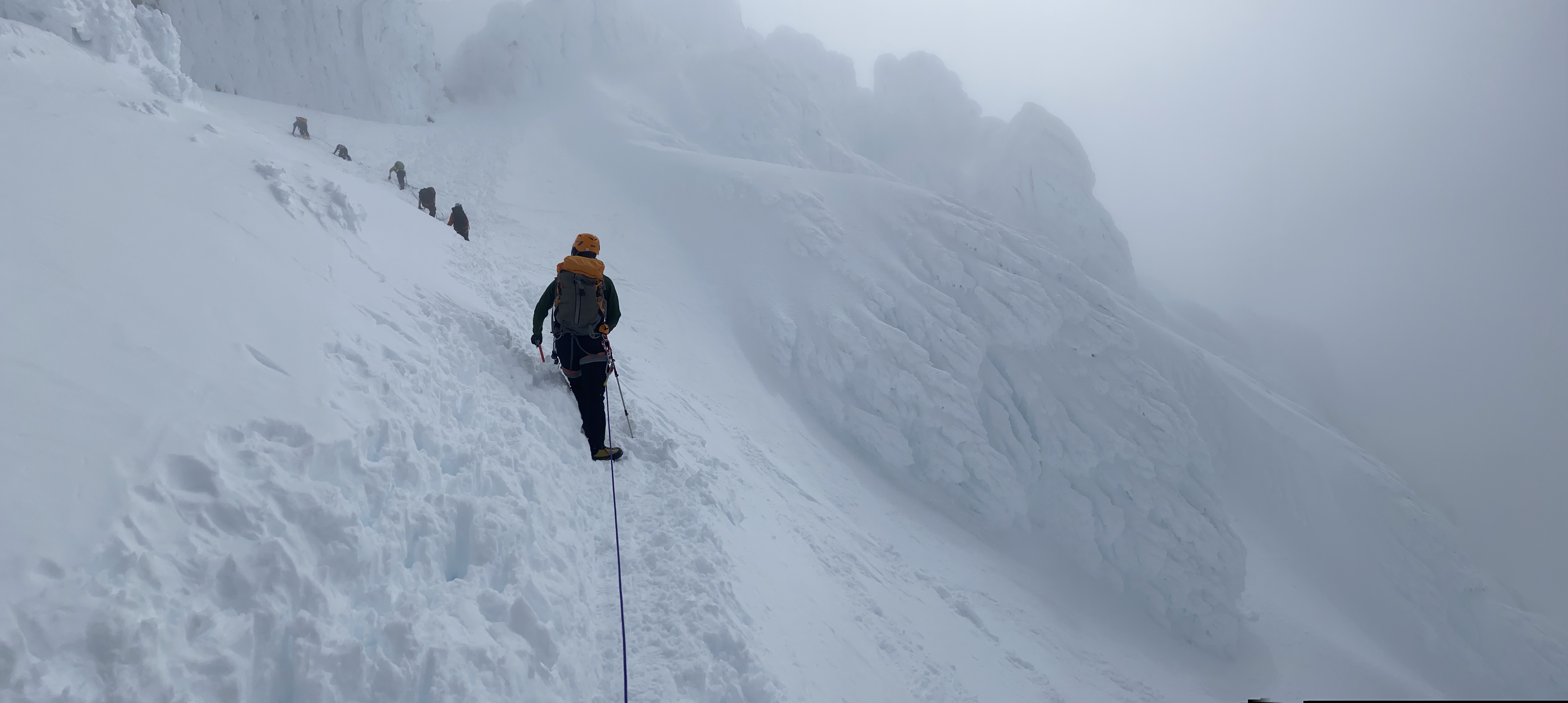
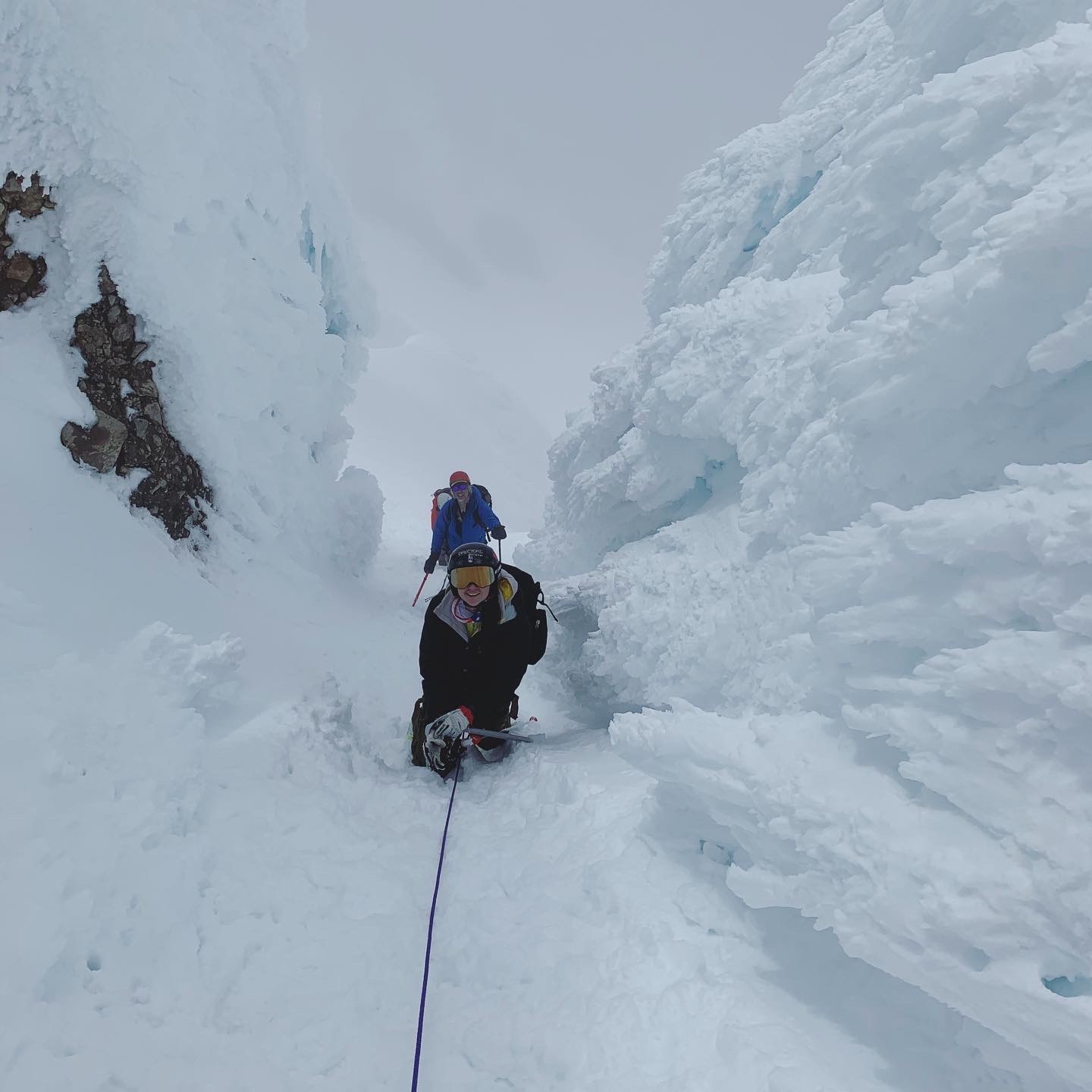
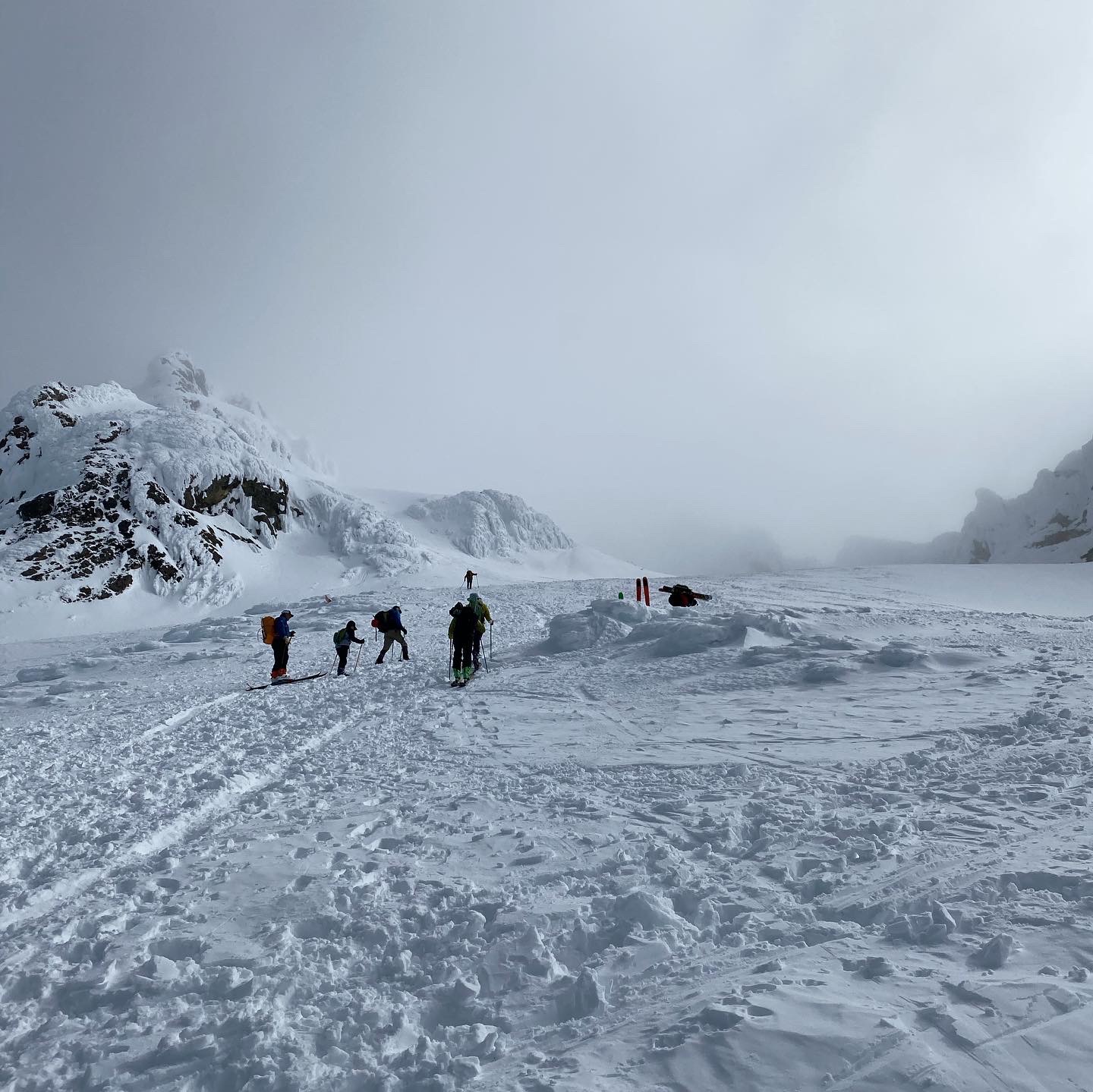
Olympian Jackie Wiles recently adventured to the summit of Mt. Hood—something she's been wanting to do for a long time.
Each and every one of U.S. Ski & Snowboard’s more than 170 athletes has a unique story, and that story has only gotten more unique since their 2019-20 season was cut short due to the COVID-19 pandemic. After returning back home to Portland, Oregon, Land Rover U.S. Alpine Ski Team athlete and Olympian Jackie Wiles settled in for the longest stint she’s been home in a long time. Her quarantine binge of choice? Watching all 23 Marvel movies, from Captain Marvel to Spider-Man: Far From Home.
Alpine Communications Manager Megan Harrod spent some time catching up with Jackie (a.k.a. “Janky lil J”) , a speed specialist who had just returned to the FIS Ski World Cup tour after suffering a knee injury prior to the 2018 Olympics that had her sidelined for the entire 2018-19 season. Join us for this athlete touch base, as we talk about what she’s been up to since returning home from Europe early, what her quarantine life looks like, and the recent adventure she embarked on prior to returning to snow for the first camp of the 2020-21 season at Copper Mountain, Colo.—an Official Training Site for U.S. Ski & Snowboard.
Megan Harrod: First of all, what have you been up to in quarantine? Have you picked up any new skills or refined any existing skills? Jackie Wiles: Quarantine has been quite the new experience, but I am honestly loving this time at home to slow down a bit. I have really enjoyed lots of time to cook, spring clean, bake lots of banana bread, and also watched all 23 Marvel movies (total of 40 hrs. 48min) in order with my roommate. Besides that, I’ve been in full training mode, and I feel lucky that I have over the years slowly built up a home gym that is now coming in handy.
MH: How long have you wanted to summit Mt. Hood? Can you share a bit about the planning process? JW: I’d say the last five years or so I have thought about climbing Mt. Hood. Growing up skiing in Oregon, I never considered myself a mountaineer and thought only experts summited the mountain. If you know what you are doing the risk isn’t very high, but there are still situations that people struggle with and need to be rescued every year, and fatalities do occur. Since I have picked up ski touring more in the last couple of years, I realized one day I wanted to summit. The ski racing community is a small tight-knit family here, and I reached out to my friend Aaron Zarosinski, asking if I could join one of his treks. We had a total of nine in our group, and leading the way were the John and Lisa Rust. They are big-time climbers and Lisa has even climbed Mt. Everest, so you could say I felt safe in good company!
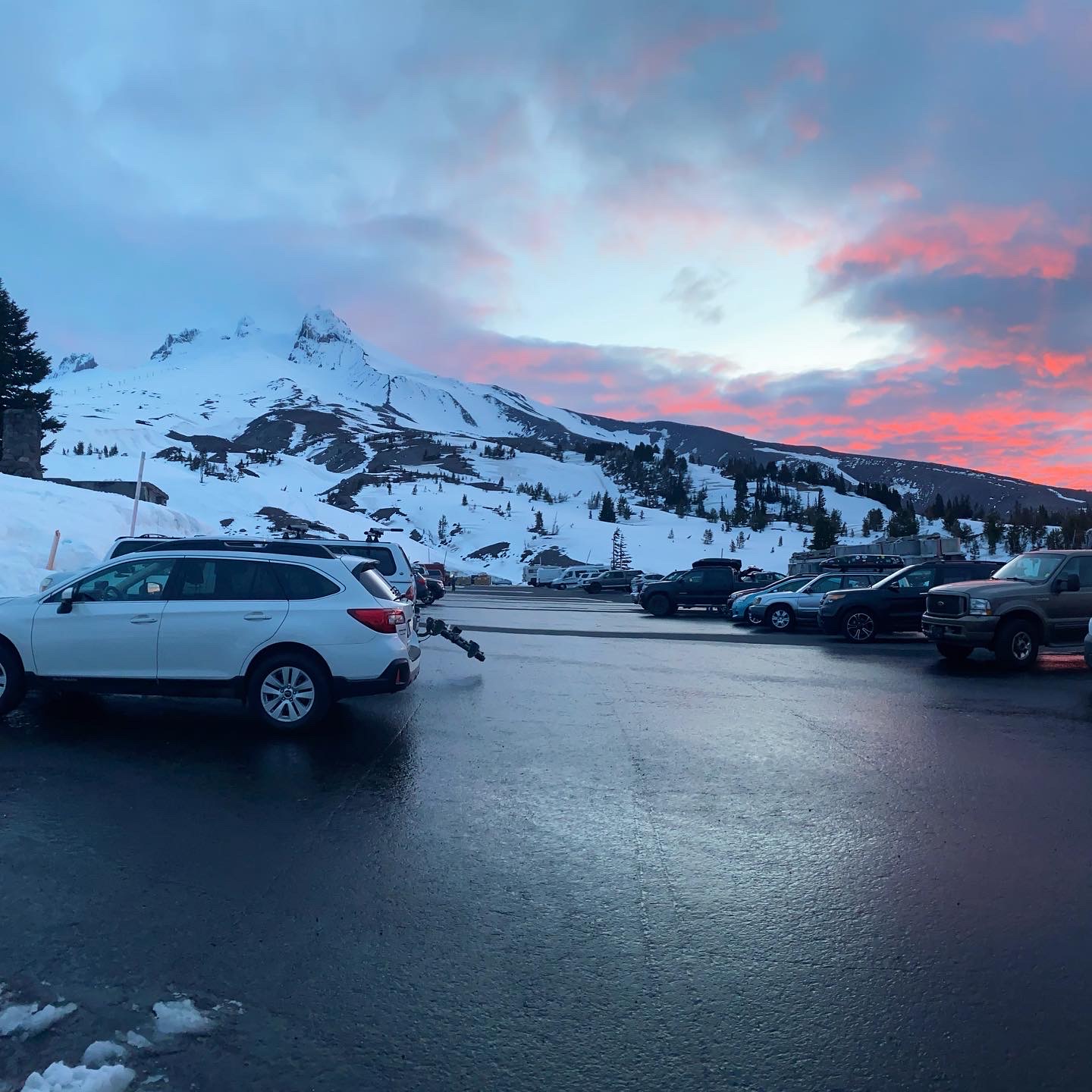
MH: What was your route? Did you take the Magic Mile and Palmer lift and then hike from there, or did you start from the bottom? JW: We started at the base of Timberline Lodge and ski toured most the way up until we had to take skis off the last bit. We then used ice axes, harnesses, ropes, and crampons. We took multiple breaks for water and snacks so it ended up being around six hrs. Starting around 5:30 am, we took the South Side Palmer Glacier Route, at the top we used the left chute through The Pearly Gates, reaching the top around 11:30 am. Sadly the clouds came in at the top so visibility was bad. I didn’t mind too much though, because the experience was still so rad. Now it gives me an incentive to do it again and look out from the highest point in Oregon!
MH: It’s been such a weird time, and you had more time at home than you’ve probably ever had (barring injury/recovery times)…what are you most excited about? Are you anxious to return to snow? JW: I haven’t been home this long for quite some time so I’m appreciating the moment for what it’s worth. I wouldn’t say I am too anxious just because I skied a bit this spring at home before resorts shut down and still been out ski touring so I’ve felt connected to the snow. However, it will definitely be nice to get on snow training again soon!
Gus Schumacher, originally from Anchorage, Alaska, has been on the Stifel U.S. Cross Country Ski Team since the 2018-19 season and is proving he is one of the fastest in the world. Coming off the Stifel Loppet Cup in Minneapolis, Gus won his first-ever World Cup in front of nearly 40,000 fans and became the youngest U.S. athlete ever to win a World Cup and the first American man to win a World Cup in over 43 years. Most recently, Gus was second in Falun, SWE, in the 20k skate - and notched the best day in history for the U.S.
Shiffrin All In With HomeLight Killington Cup VIP Experience
By Megan Harrod
May, 19 2020
Two-time Olympic champion and Land Rover ambassador Mikaela Shiffrin announced her involvement with ALL IN, accepting the young phenom Coco Gauff’s (fellow Barilla athlete) nomination. (Steve Earl)
Two-time Olympic champion and Land Rover ambassador Mikaela Shiffrin announced her involvement with ALL IN, accepting the young phenom Coco Gauff’s (fellow Barilla athlete) nomination. ALL IN provides an online auction experience that directly benefits organizations providing food to kids, elderly and frontline heroes in need. One hundred percent of the proceeds will directly benefit Feeding America, Meals on Wheels, World Central Kitchen, and No Kid Hungry.
In getting involved with ALL IN, Mikaela not only joins fellow U.S. Ski & Snowboard stars Chloe Kim and Shaun White—whose one-of-a-kind experiences include hitting the slopes at one of U.S. Ski & Snowboard’s official training sites, Mammoth Mountain, in Mammoth Lakes, Calif.—but also big names in the entertainment industry like Tiger Woods, Chris Pratt, Chris Hemsworth, Gisele Bündchen, Tom Brady, and more.
The ALL IN Challenge, which has raised over $44 million, aims to be the world’s largest digital fundraiser in history by raising tens of millions of dollars to feed those in need. Food insecurity is a mounting issue but never more important than during COVID-19 and the unprecedented shortage of food resources our nation is facing.
Among those most in need: students who rely on currently closed schools for several of their meals each week; the newly unemployed who are facing uncertain circumstances; and a vulnerable elderly population sequestered in their homes without access to food. The ALL IN Challenge was created and built by Fanatics founder and executive chairman Michael Rubin, along with Alan Tisch, Gary Vaynerchuk, with support from the entire Fanatics team, all on behalf of the All In Challenge Foundation.
Meet Mikaela Shiffrin At Killington Women's Ski World Cup + Full Ski Gear Setup
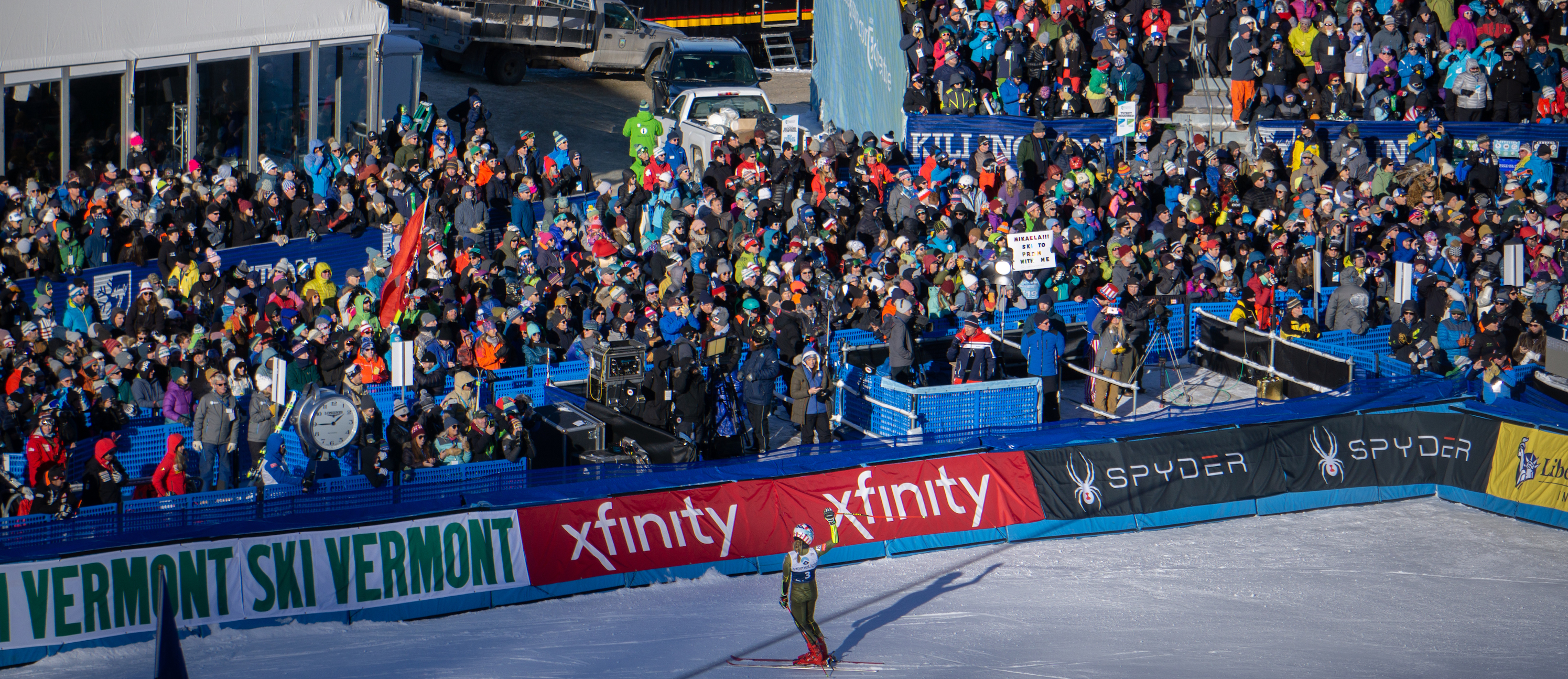
Hit the slopes in style, thanks to two-time Olympic gold medalist Mikaela Shiffrin! She's going All In and giving you and a friend VIP tickets to the women’s FIS Ski World Cup—aka the HomeLight Killington Cup—in Killington, Vermont. You'll enjoy behind-the-scenes access to the bib draw and press conference, and you'll have an exclusive meeting and photo op with Mikaela. Of course, the three-time Overall World Cup champion isn't sending you home empty-handed. You and your guest will take home a U.S. Ski and Snowboard kit for two, complete with jackets and a gift bag. As the winner, you'll receive a Killington race bib signed by Mikaela, a pair of Oakley Flight Deck XM Mikaela Shiffrin goggles and an Atomic boot-fitting experience, including skis, boots and bindings and a behind-the-scenes tour with Mikaela's race and service team. To top it off, the winner will receive a full-access IKON pass with no blackout dates, so you can try out all of your new gear at 43 destinations around the globe. 100% of the money raised through this Game/Auction will go directly to Feeding America, Meals on Wheels, World Central Kitchen, and No Kid Hungry.
Package Details:
100% of the money raised through this Game/Auction will go directly to Feeding America, Meals On Wheels, World Central Kitchen, and No Kid Hungry.
Behind-the-scenes access to bib draw, press conference and exclusive meeting and photo op with Mikaela
Lodging for two (2) for Friday and Saturday evening in Killington, Vermont
One (1) full-access, no blackout dates IKON Pass
One (1) pair of Oakley Flight Deck XM Mikaela Shiffrin snow goggles
One (1) signed Killington race bib
One (1) ski, boot and binding package of winner's choice from Atomic and VIP boot-fitting service at a premier ski shop in Killington, Vermont, plus an exclusive, behind-the-scenes tour with Mikaela's Atomic race and service team
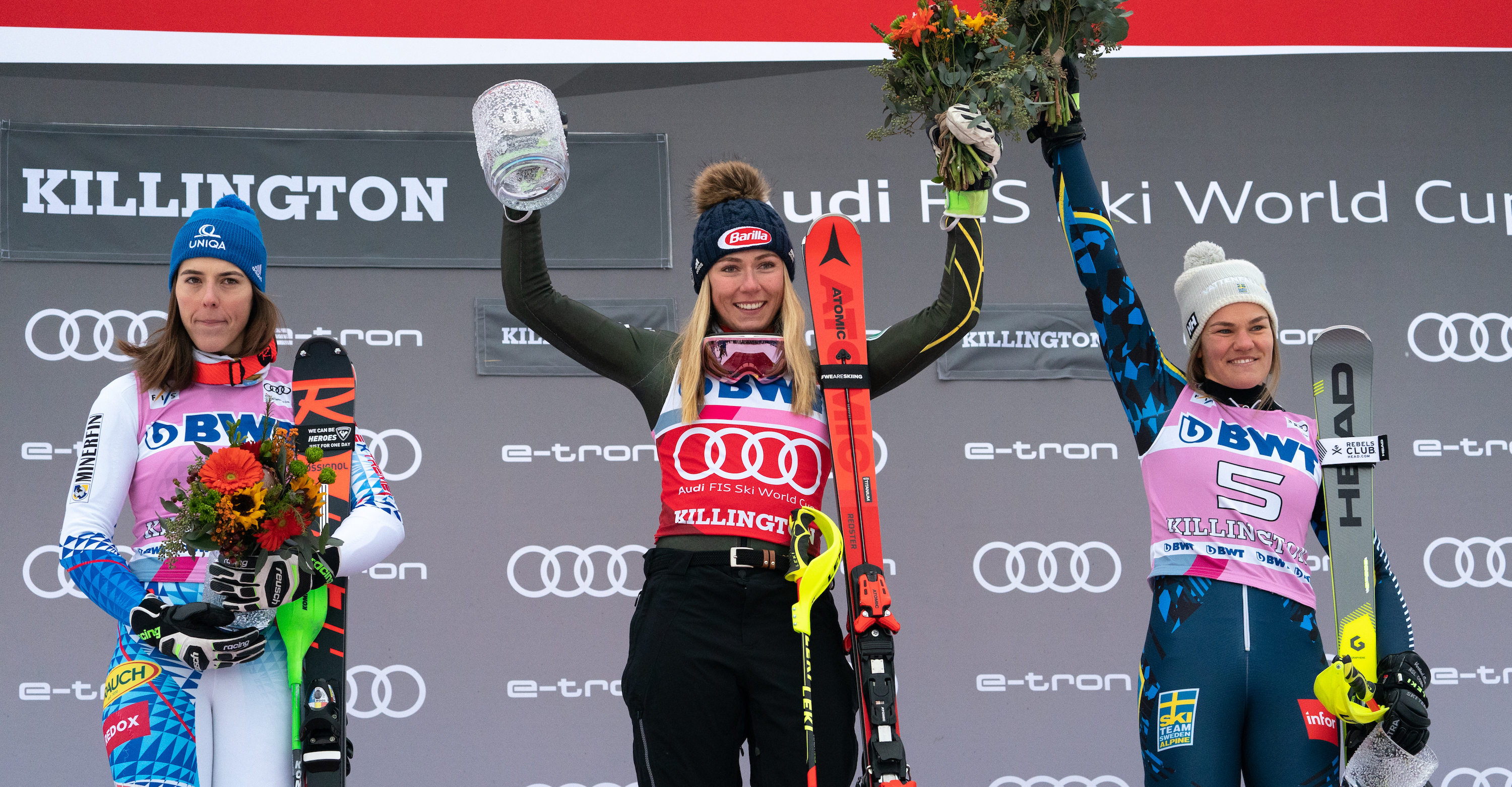
As bidding closed on May 26, Mikaela raised $41,000 for charity. One hundred percent of the proceeds will directly benefit Feeding America, Meals on Wheels, World Central Kitchen, and No Kid Hungry.
Gus Schumacher, originally from Anchorage, Alaska, has been on the Stifel U.S. Cross Country Ski Team since the 2018-19 season and is proving he is one of the fastest in the world. Coming off the Stifel Loppet Cup in Minneapolis, Gus won his first-ever World Cup in front of nearly 40,000 fans and became the youngest U.S. athlete ever to win a World Cup and the first American man to win a World Cup in over 43 years. Most recently, Gus was second in Falun, SWE, in the 20k skate - and notched the best day in history for the U.S.
Shiffrin Joins Keys as Founding Champion of Kindness Wins Foundation
By U.S. Ski & Snowboard
May, 12 2020
Kindness Wins, a collaborative engine for kindness, announced today the addition of two-time Olympic gold medalist and three-time overall World Cup champion alpine skier Mikaela Shiffrin to its lineup of Champions. With the addition of Shiffrin, Kindness Wins will greatly expand its platform of influence, furthering its mission to spread kindness to the masses. (U.S. Ski & Snowboard)
ROCK ISLAND, Ill. – Kindness Wins, a collaborative engine for kindness, announced today the addition of two-time Olympic gold medalist and three-time overall World Cup champion alpine skier Mikaela Shiffrin to its lineup of Champions. With the addition of Shiffrin, Kindness Wins will greatly expand its platform of influence, furthering its mission to spread kindness to the masses.
Launched in early 2020 by Founding Champion Madison Keys, Kindness Wins is a nonprofit that acts as an umbrella organization for kindness initiatives, working with professional athletes as champions to demonstrate that even in the most competitive environment, deeds and actions of generosity and compassion are possible and the outcomes are highly impactful.
With special emphasis on kindness to self, kindness to youth, and kindness to others in times of struggle, the organization is proving its importance and its impact now more than ever. Most recently, the organization launched Kindness In Crisis: an online auction led by Keys, Shiffrin, and other athletes that gave professional athletes the opportunity to auction off signed memorabilia and raise funds for COVID-19 relief.
“Following our work together on the Kindness In Crisis auction, I am thrilled that Mikaela is joining the organization as a Champion,” said Madison Keys. “Kindness Wins focuses not just on those who talk about kindness, but those who take action and put kindness into practice, and Mikaela is the embodiment of this mission. I have truly enjoyed getting to know her better in recent weeks and cannot wait to see the great things she has in store for this organization, and for society, in her role as Champion.”
Kindness Wins has started a kindness movement, using its website, kindnesswins.org, and social channels (@KindnessWinsFoundation) as a hub of kindness activity where such deeds and gestures, big or small, are shared and celebrated, inspiring society to actively be more thoughtful, considerate and compassionate.
“I’m so excited to dive into Kindness Wins with Madison,” said Mikaela Shiffrin. “I am an introvert by nature, and it has taken a lot of work just to develop any level of comfort sharing myself and my life with the world, especially on social media. I actually feel like my sport and the media have been a tool that have helped me become more comfortable with myself, but I also have seen and felt how the media and the internet can have an incredibly negative impact on peoples’ confidence and self-worth. As social media platforms grow, cyberbullying continues to escalate— people often say incredibly hurtful things while hiding behind their screen—but I do believe that the online world has the potential to be a place of positivity and support rather than a hub for cyber-bullying and we have the ability to make that transformation happen starting with this message of spreading Kindness.”
In February of 2020, Shiffrin’s world came to a screeching halt, as she suffered the loss of her father Jeff. “One of the mottos my dad lived by was ‘Be nice, think first, and have fun’—and I will take that with me throughout my entire life. My parents both instilled in me that I should treat other people who I want to be treated and, even more importantly, to hold others accountable for the way they treat those around them. For this reason and more, the Kindness Wins’ message has resonated with me. I love that this organization is structured as a collaborative engine for kindness and will provide a platform for me and other athletes to pursue our own Kindness projects within its framework. Being kind will never go out of style, and I really believe that we can have a powerful impact on society in spreading this message.”
In addition to its own platform, Kindness Wins also supports the individual kindness-related endeavors of its Champions. Working together to rally behind kindness, Kindness Wins Champions will collaboratively support their fellow champions in the specific areas each Champion supports.
“I’m looking forward to exploring and announcing my own passion projects that I will pursue with Kindness Wins,” said Shiffrin. “Meanwhile, my first official act as one of the ‘Founding Champions’ will be participating in Kindness Wins Day on May 22—a day where we will recognize and celebrate acts of kindness that we find inspiring, and I encourage everyone to participate along with us.”
Kindness Wins Day, taking place on May 22 is a movement to help change the world: one day, one post and one individual at a time. Participants are challenged to tag and recognize deeds and actions of generosity and compassion, big or small, on social media, using the hashtag #KindnessWinsDay and tagging @KindnessWinsFoundation for a chance to be featured. More information can be found at kindnesswins.org.
About Madison Keys
25-year-old Madison Keys is a Grand Slam finalist (2017 US Open), two-time Grand Slam semifinalist (2018 Roland Garros and 2015 Australian Open), and holds five WTA titles. She achieved a career-high ranking of No. 7 in the world in October 2016 and has been consistently ranked inside the top 25 by the Women's Tennis Association (WTA) since early 2015.
About Mikaela Shiffrin
Double-Olympic champion, five-time World Champion, and winningest slalom skier of all-time Mikaela Shiffrin has elevated women’s ski racing globally—both on and off the mountain. At a mere 25-years-old, Mikaela has 66 World Cup victories across six disciplines to her name and is the only athlete to win in all six disciplines. In Sochi in 2014, Mikaela won Olympic gold, becoming the youngest slalom champion in history. In 2016, she broke the record for the largest win margin in slalom for women (3.07 seconds). During the 2018 Winter Olympics in Pyeongchang, Shiffrin reached the top of the podium in the giant slalom at the Olympics, with gold in giant slalom and silver in the alpine combined. As well as being the youngest skier, male or female, to win 50 World Cup race before the age of 24, she is also the first athlete to win four successive World Championship titles in a single discipline and holds the record for wins in one season with 17 victories (shattering the previous 30-year record of 14).
Gus Schumacher, originally from Anchorage, Alaska, has been on the Stifel U.S. Cross Country Ski Team since the 2018-19 season and is proving he is one of the fastest in the world. Coming off the Stifel Loppet Cup in Minneapolis, Gus won his first-ever World Cup in front of nearly 40,000 fans and became the youngest U.S. athlete ever to win a World Cup and the first American man to win a World Cup in over 43 years. Most recently, Gus was second in Falun, SWE, in the 20k skate - and notched the best day in history for the U.S.
2020-21 Land Rover U.S. Alpine Ski Team Nominations
By Megan Harrod
May, 5 2020
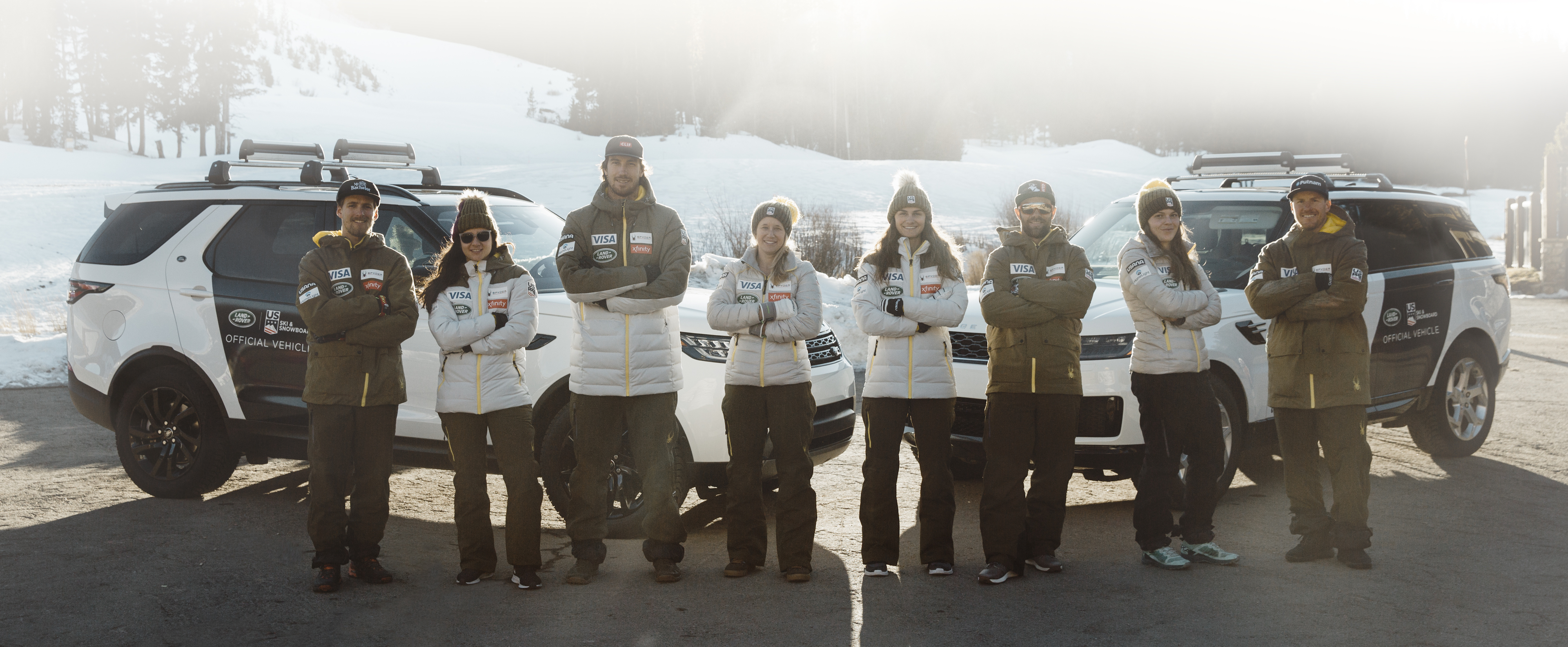
U.S. Ski & Snowboard has announced the Land Rover U.S. Alpine Ski Team nominations for the 2020-21 competition season.
U.S. Ski & Snowboard has announced the Land Rover U.S. Alpine Ski Team nominations for the 2020-21 competition season. Nominations include those active athletes who qualified based on published selection criteria in the prior season.
“In a world of uncertainty, we remain determined and excited to nominate one of the deepest teams we have fielded in years."
- Land Rover U.S. Alpine Ski Team Director Jesse Hunt
Double-Olympic champion Mikaela Shiffrin and 2019 Xfinity Birds of Prey victor Tommy Ford headline the list of both accomplished and emerging athletes heading into the 2020-21 season. The 2019-20 season was a step in the right direction for the Land Rover U.S. Alpine Ski Team, with 15 FIS Ski World Cup podiums, one Junior World Championship medal, and seven NorAm titles. Mikaela led the way with 13 podiums and six victories in 19 World Cup starts, despite missing nine races. She’ll head into 2020-21 as the winningest slalom skier of all-time, with 43 slalom victories, and ranked fourth on the all-time win list behind Marcel Hirscher (67), U.S. Ski Team alumna and Land Rover ambassador Lindsey Vonn (82), and Ingemar Stenmark (86).
The men’s team was highlighted by Tommy, with solid and consistent skiing, finishing his career-best season ranked fifth in the world in giant slalom with six top-15 results, four top-five results, two podiums and a massive victory by .80 seconds in Beaver Creek, Colo. He is joined by a men’s team with considerable depth, specifically the men’s speed team—which had four athletes finish in the top-20 in the world in downhill for the first time ever: Travis Ganong (13th), Ryan Cochran-Siegle (14th), Bryce Bennett (16th) and Steven Nyman (20th).
The 2020-21 season will feature the much-anticipated FIS Ski World Championships in Cortina d’ Ampezzo, Italy, February 8-21, 2021. Following the premature end to the 2019-20 season with the cancellation of FIS Ski World Cup Finals in Cortina d’Ampezzo due to the coronavirus outbreak, the athletes are looking forward to competing in the Dolomites. Cortina d’Ampezzo is a favorite classic venue on the women’s World Cup circuit where the U.S. women’s speed team has enjoyed a lot of success.
The 43 athletes nominated will be supported by a strong coaching staff, committed to “winning at every level,” which is Alpine Director Jesse Hunt’s mantra. “In a world of uncertainty, we remain determined and excited to nominate one of the deepest teams we have fielded in years,” noted Jesse. “We have a great mix of veteran athletes and bold young prospects, from World Cup winners Ted Ligety, Steven Nyman, Travis Ganong, Tommy Ford, Alice McKennis, and Mikaela Shiffrin to our recently named development team athletes. We are building a system to win at every level of the alpine pipeline.”
Athletes nominated to the team are scheduled to open the season with their first on-snow training camps this summer, pending COVID-19 considerations.
Each athlete accepting the nomination to U.S. Ski Team receives world-class program support, along with access to the U.S. Ski and Snowboard Center of Excellence, as well as athletic benefits including an elite coaching, sport science, sports medicine, and high-performance staff, and education opportunities.
A 2020-21 staff announcement will be forthcoming, while an official Land Rover U.S. Alpine Ski Team announcement will be made in the fall.
2020-21 Land Rover U.S. Alpine Ski Team Nominations
(Hometown; Club; Birthdate)
A TEAM Men
Bryce Bennett (Squaw Valley, Calif.; Squaw Valley Ski Team; 7/14/1992)
Ryan Cochran-Siegle (Starksboro, Vt.; Cochran’s/Mount Mansfield Ski & Snowboard Club; 3/27/1992)
Tommy Ford (Bend, OR; Mt. Bachelor Ski Education Foundation; 3/20/1989)
Travis Ganong (Squaw Valley, Calif.; Squaw Valley Ski Team; 7/14/1988)
Ted Ligety (Park City, Utah; Park City Ski and Snowboard; 8/31/1984)
Steven Nyman (Sundance, Utah; Park City Ski and Snowboard/Sundance Ski Team; 2/12/1982)
Women
Breezy Johnson (Victor, Idaho; Rowmark Ski Academy; 1/19/1996)
Laurenne Ross (Bend, Ore.; Mt. Bachelor Sports Education Foundation; 8/17/1988)
Mikaela Shiffrin (Eagle-Vail, Colo.; Burke Mountain Academy/Ski & Snowboard Club Vail; 3/13/1995)
B TEAM
Men
Sam DuPratt (Park City, UT; Park City Ski Education Foundation; 11/28/1993)
Bridger Gile (Aspen, Colo., Aspen Valley Ski Club and Ski & Snowboard Club Vail; 10/15/1999)
Jared Goldberg (Holladay, Utah; Snowbird Sports Education Foundation; 6/15/1991)
Jimmy Krupka (Waitsfield, Vt.; Dartmouth College and Green Mountain Valley School (7/15/1998)*
Sam Morse (Carrabassett Valley, Maine; Carrabassett Valley Academy; 5/27/1996)
Kyle Negomir (Littleton, Colo.; Ski & Snowboard Club Vail; 10/3/1998)
River Radamus (Edwards, Colo.; Ski & Snowboard Club Vail; 2/12/1998)
Ben Ritchie (Waitsfield, VT; Green Mountain Valley School; 9/5/2000)
Jett Seymour (Steamboat, Colo.; Steamboat Springs Winter Sports Club/University of Denver Ski Team; 11/5/1998)
George Steffey (Lyme, N.H.; Stratton Mountain School; 8/8/1997)
Luke Winters (Gresham, Ore.; Sugar Bowl Academy; 4/2/1997)
Women
Keely Cashman (Strawberry, Calif.; Squaw Valley Ski Team; 4/4/1999)
Alice McKennis (New Castle, Colo.; Sunlight Winter Sports Club/Rowmark Ski Academy; 8/18/1989)
Alice Merryweather (Hingham, Mass.; Attitash Race Team/Stratton Mountain School; 10/5/1996)
Paula Moltzan (Prior Lake, Minn.; Buck Hill Ski Team/Ski and Snowboard Club Vail; 4/7/1994)
Nina O’Brien (Edwards, Colo.; Burke Mountain Academy/Squaw Valley Ski Team; 11/29/1997)
Jacqueline Wiles (Aurora, Ore.; White Pass Ski Club; 7/13/1992)
C TEAM
Men
Cooper Cornelius (Glenwood Springs, Colo.; Aspen Valley Ski Club; 6/20/1999)
Isaiah Nelson (Wayzata, MN.; Buck Hill Ski Racing Club; 4/3/2001)
Women
Katie Hensien (Redmond, Wash.; Rowmark Ski Academy; 12/1/1999)
AJ Hurt (Carnelian Bay, Calif.; Squaw Valley Ski Team; 12/5/2000)
Nicola Rountree-Williams (Edwards, Colo.; Loveland Ski Area; 7/7/2002)
Zoe Zimmermann (Gilford, N.H.; Burke Mountain Academy; 5/16/2002)
DEVELOPMENT TEAM
Men
Jacob Dilling (Vail, Colo.; Ski & Snowboard Club Vail, 10/19/1999)
Kellen Kinsella (Edwards, Colo.; Dartmouth College and Ski & Snowboard Club Vail; 8/7/2001)
Trent Pennington (Shalimar, Fla.; Ski and Snowboard Club Vail; 5/8/2002)*
Jack Smith (Sun Valley, Idaho; Sun Valley Ski Education Foundation; 4/24/2001)
Bradshaw Underhill (Newbury, N.H.; Killington Mountain School; 3/10/2000)*
Women
Lauren Macuga (Park City, Utah; Park City Ski & Snowboard; 7/4/2002)
Ainsley Proffit (St. Louis, MO; Sugar Bowl Ski Team & Academy; 3/21/2001)
Allie Resnick (Vail, Colo.; Ski & Snowboard Club Vail; 9/1/2001)*
Emma Resnick (Vail, Colo.; Ski & Snowboard Club Vail; 7/23/2003)
Alix Wilkinson (Mammoth Lakes, Calif.; Squaw Valley Ski Team; 8/2/2000)
Isabella Wright (Salt Lake City, UT; Snowbird Sports Education Foundation; 2/10/1997)*
Ben Ritchie hails from the East Coast, learning to ski at Jay Peak Ski Club, and moving on to Green Mountain Valley School.
Luke Winters
Luke Winters first learned to ski in Oregon and cultivated his love for racing out of Sugar Bowl Academy in Lake Tahoe, California. Winters became a strong skier in the technical disciplines, honing in on slalom.
Ryan Cochran-Siegle
Ryan Cochran-Siegle got his start in skiing from his family’s famous Cochran’s Ski Area. Cochran-Siegle skied to the development team in 2010 and has not looked back. Cochran-Siegle won gold in downhill and combined in the 2012 junior worlds.
Tommy Ford
Tommy Ford grew up skiing out of Mt. Bachelor in Oregon. He has been a strong force on the alpine scene since the beginning. Ford locked four gold medals at the 2006 U.S. Junior Championships.