Vonn and Subban Featured on Acho's "Uncomfortable Conversations with a Black Man"
By U.S. Ski & Snowboard
July, 9 2020
U.S. Ski Team alumna, winningest alpine ski racer of all time and Land Rover ambassador Lindsey Vonn and her fiance, star defenseman New Jersey Devils, PK Subban, attend the 2019 MTV Video Music Awards at Prudential Center on August 26, 2019, in Newark, New Jersey (Jeff Kravitz-FilmMagic)
U.S. Ski Team alumna, winningest female alpine ski racer of all time and Land Rover ambassador Lindsey Vonn and her fiance, star defenseman New Jersey Devils, PK Subban, recently joined former NFL linebacker Emmanuel Acho along with The Bachelorette stars Rachel Lynn Lindsay Abasolo and Bryan Abasolo on Emmanuel's "Uncomfortable Conversations with a Black Man" series on Instagram.
On what was supposed to be their wedding day, Lindsey and PK talked candidly about what it's like to be in an interracial relationship with Emmanuel, Rachel, and Bryan in the fifth installment of "Uncomfortable Conversations with a Black Man. The Interracial Episode."
PK said he loves every moment of the conversations they have with their network on the topic. "What this promotes is growth and strength in our relationship, and I'm not against that," he added. "Adversity is a great thing. When people show true colors—this world is full of a lot of people—not everybody is going to be accepting of everything."
Lindsey says she hopes this will be shared, and the conversation will continue. Check out the full episode below.
Ligety and Moseley Instagram Live Featured in SKI Magazine
By Megan Harrod
July, 8 2020
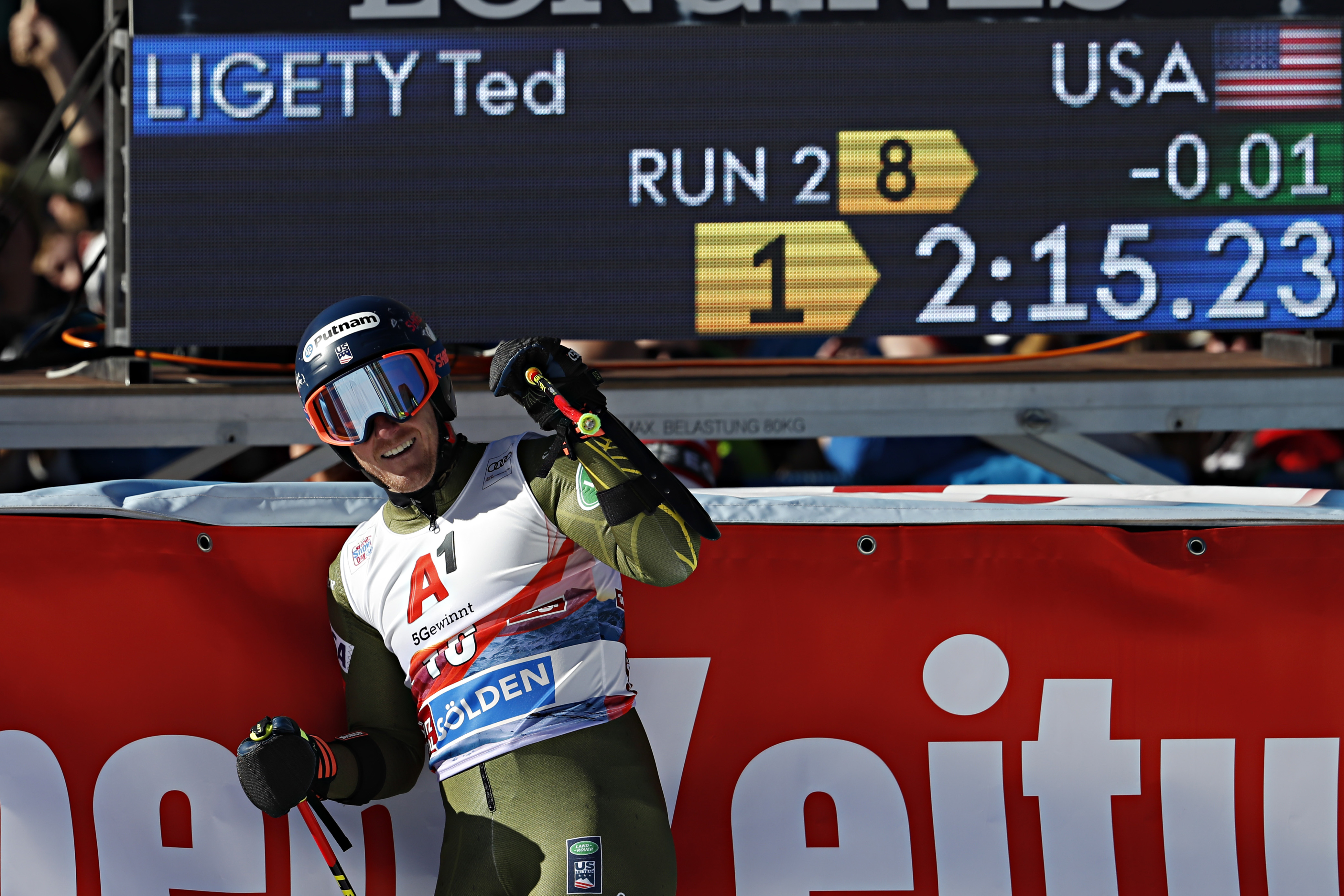
Back in April, Olympic champion and Land Rover ambassador Ted Ligety caught up with U.S. Ski Team alumnus Jonny Moseley, Olympic and World Cup champion in mogul skiing. SKI Magazine recently featured the conversation on its website. (Alexis Boichard - Agence Zoom/Getty Images)
Back in April, Olympic champion and Land Rover ambassador Ted Ligety caught up with U.S. Ski Team alumnus Jonny Moseley, Olympic and World Cup champion in mogul skiing. SKI Magazine recently featured the conversation on its website.
In the hour-long conversation, the two skiing legends discuss everything from the International Ski Federation (FIS) to technique they have in common and ski tips for each other and the audience, and beyond. The video is well worth the watch. As SKI noted in the article:
This interview is an incredible conversation between two ski legends packed with valuable details from their careers as professional skiers. Beginning at minute 8:30,Jonny explains the inspiration and development of his signature move, the "Dinner Roll." Moseley goes to explain how and why he had to go head to head with FIS to persuade them to allow inverted tricks in mogul skiing.
If ski measurements and regulations are your thing, the controversies surrounding FIS regulations in alpine racing is explained by Ted beginning at 16:30. Ligety discusses the issue of ski radius in the GS discipline and discusses the lack of communication between the FIS organization and athletes at minute 19:00.
Alumnus Puckett's Return to U.S. Ski Team Featured in Aspen Times
By Megan Harrod
July, 7 2020
Four-time Olympian and U.S. Alpine Ski Team alumnus and 2010 skicross Olympian Casey Puckett recently concluded a collective nine years of coaching Aspen Valley Ski & Snowboard Club (AVSC) athletes, returning to the Land Rover U.S. Alpine Ski Team as head technical coach for the women's Europa Cup team. (NASTAR)
Four-time Olympian and U.S. Alpine Ski Team alumnus and 2010 skicross Olympian Casey Puckett recently concluded a collective nine years of coaching Aspen Valley Ski & Snowboard Club (AVSC) athletes, returning to the Land Rover U.S. Alpine Ski Team as head technical coach for the women's Europa Cup team. Austin Colbert, from the Aspen Times, recently caught up with Casey to talk about his return to U.S. Ski & Snowboard.
Casey coached two-time Olympian Alice McKennis her first two years of FIS at AVSC, and at their recent on-snow camp at Official Training Site Copper Mountain, Colo., Alice had a nickname for Casey—"Five Time". As the Aspen Times stated, "This required an explanation for the younger U.S. national team skiers, as they weren’t all too familiar with Puckett’s past, which includes an impressive World Cup career and five Olympic appearances."
As head women's coach Paul Kristofic said following the Copper camp, “A big target for this camp was the introduction of Casey Puckett as the Europa Cup coach, as he was leading the entire group since [World Cup Tech Team Head Coach] Magnus [Andersson] wasn’t there, so it was a chance for him to work with those athletes for the first time, work with Katie [Twible] for the first time, and get to know everybody."
“It says something about AVSC when the U.S. team is actively recruiting coaches from the club. It just shows you the level of coaches we have here,” Puckett said. “We have such a good group of kids here and they are a lot of fun to work with. They work hard and they are fast. It’s going to be hard to leave those guys. I’m going to miss them. But I think it will be good to move to this next level and see what’s out there.”
Puckett’s main job with U.S. Ski and Snowboard this season will be to help develop young skiers such as AJ Hurt, Katie Hensien and Alix Wilkinson. McKennis, a two-time Olympian from New Castle, is primarily a World Cup speed skier and won’t directly work with Puckett.
The Europa Cup team is a newer creation made by U.S. alpine director Jesse Hunt, who took over the role in 2018. Hunt was actually one of Puckett’s coaches back when he was an athlete, and it was Hunt who reached out to Puckett to bring him on as a national team coach. While the Europa Cup and North American Cup are deemed to be the same level on paper, in reality the Europa Cup is a step up from Nor-Ams and success there will make it easier for U.S. athletes to make the jump to the World Cup.
“If you are not going to that series and paying attention to that level, then it’s a little bit more difficult to make the step to the World Cup. His motto is to win at every level, so he hired me to come help do that,” Puckett said of Hunt. “You don’t often get a call from the U.S. team to coach. If I would have passed it by, it may not have been there again, so I went for it.”
Up next for Casey and the Europa Cup team will be an on-snow camp at Official Training Site Timberline Lodge & Ski Area in Oregon.
Land Rover U.S. Alpine Ski Team Men's Speed Wraps Camp at Timberline
By Megan Harrod
July, 2 2020
The Land Rover U.S. Alpine Ski Team men's speed team recently concluded their first on-snow prep camp for the 2020-21 season with a five-day giant slalom-focused camp at Official Training Site Timberline Resort & Ski Area in Mt. Hood, Ore.
The Land Rover U.S. Alpine Ski Team men's speed team recently concluded their first on-snow prep camp for the 2020-21 season with a five-day giant slalom-focused camp at Official Training Site Timberline Resort & Ski Area in Mt. Hood, Ore.
Led by head men's speed coach Randy Pelkey, assisted by longtime speed coach Scotty Veenis and men's team manager Gwynn Watkins, athletes included Olympians Steven Nyman, Travis Ganong, and Bryce Bennett, as well as World Junior downhill champion Sam Morse and former University of Utah NCAA giant slalom standout Sam Dupratt.
After weeks of planning and time spent creating COVID-19 protocol, led by U.S. Ski & Snowboard High-Performance Director Troy Taylor and Lead Physical Therapist Gillian Bower, along with team managers, staff, and beyond, alpine athletes across training groups were finally able to return to snow.
The focus of the camp was technical, with a giant slalom focus, but there was a bigger accountability component as well. "We challenged the guys to tell us what was good about their skiing, what they wanted to fix, and how they wanted to fix it," explained Randy. "They're really good at knowing what's bad about their skiing and what they want to fix...but they really don't have the idea of how to go about the progression to fix that. We tried to fill in behind that, and give them the ways to improve—to look at it and say, 'this is the root of what you're seeing, this is the outcome...but this is how to fix that through the basics.'" The message was to get them to look at it from a different perspective.
Randy says a lot of ski racers can't really identify something positive about their skiing, as athletes tend to be accustomed to focusing on the bad. By approaching it from a coach's perspective, the athletes were able to think differently and more holistically about their skiing, while the coaches were able to fill in behind that—something Randy says was really a fun thing for him. Seeing what the athletes wanted to work on, through the athletes' eyes and critical reflection, and figuring out how to support their goals, was gratifying for Randy and Scotty.
Though the COVID-19 protocol was detailed in order to ensure athlete and staff safety, Randy and the athletes settled into their new normal with relative ease, thanks to their positive attitudes. "I think about it like a big project coming up—like if you're going to build a house, but you pick up one piece at a time, it becomes easy and you just get in the flow of it," explained Randy. "It's the new normal, so we just kind of got in the flow of cleaning the iPad every time someone touched it, cleaning the computers, and going through the whole protocol. It becomes more natural as you do it, and it's not as cumbersome as you'd think. Just to be the thought behind it and follow-through, feels good...and to look at it from a perspective that it's not about you as much, but everyone else. That's refreshing."
As far as conditions at Timberline go, the crew skied five days in a row, and two of the days were frozen and were extremely good. Randy said that the staff at Timberline did an unbelievable job of supporting the team and ensuring the camp was safe and productive. He said, in particular, they worked hard to get the guys the terrain they needed, and "working with us on line-cutting, and just all of the stuff that made the camp really easy to not only do what we got there to do but do it safely," he added. "They were instrumental...unbelievable."
Off the snow, the crew packed up their Land Rovers and went mountain biking most afternoons. They stayed in Government Camp, which was a preference of the athletes. This made access to great mountain biking easy, as they made an effort to concentrate on spending as much time as they could outside, socially distanced, having fun.
The plan for the men's speed team will be to return to Timberline in early August for a training camp but stay in Hood River for a little change in scenery and a snow-water camp focus. Randy says the focus off-snow will be balance, and they'll likely take advantage of the access to kiting that Hood River provides for their afternoon activity. The on-snow focus will be a follow-up to the last camp, with a giant slalom focus and a little bit of slalom. The goal is consistency.
Lastly, Randy wanted to thank Rachel Rourke from Howard Head Sports Medicine for joining the crew as the guest PT, as well as Gwynn, who was very instrumental in managing the food piece and the COVID-19 protocol for the group.
U.S. Ski & Snowboard sanctioned training camp attendance is optional. U.S. Ski & Snowboard athletes and staff should not feel pressure to travel to train. All sanctioned training camp policies and protocols are subject to change based on local, state, and federal public health orders, updated guidance from the USOPC, or updated U.S. Ski & Snowboard policies.
Sam Morse
At a mere 23-months-old, Morse made his first tracks skiing at Sugarloaf, Maine. His official hashtag #mooseontheloose is based on his childhood nickname "Moose."
Bryce Bennett
Bryce Bennett began skiing at the age of two, hailing from Olympic Valley, California, where he grew up shredding the terrain of Palisades Tahoe. Bennett was first named to the Stifel U.S.
Shiffrin, Voisin, and More Top Women Featured in the Modern Wellness Guide
By Megan Harrod
July, 2 2020
Land Rover U.S. Alpine Ski Team assistant women's World Cup speed team coach Karin Harjo congratulates winningest female alpine ski racer, Lindsey Vonn, following her 82nd World Cup victory in Are, Sweden, in March of 2018.
The Modern Wellness Guide recently launched their Women in Sports Campaign, featuring four of the top athletes in the snowsports industry and two female coaches who are leading the way, including Olympic gold medalists Mikaela Shiffrin and Maddie Bowman, Olympic bronze medalist Brita Sigourney, and seven-time X Games gold medalist Maggie Voisin.
Featured U.S. Ski & Snowboard coaches include Land Rover U.S. Alpine Ski Team assistant women's World Cup speed team coach Karin Harjo, who has paved the way for colleagues like assistant women's World Cup and Europa Cup tech team coach, Katie Twible. In 2016, Karin became the first woman in FIS Ski World Cup history to set a slalom course.
When asked who her role model was growing up, and how she manages the pressure of being a role model for young female athletes, Karin—who has coached Olympic champions Lindsey Vonn and Mikaela Shiffrin, among many more World Cup podium finishers—replied,
I’ve been blessed with many role models in my life. The consistent message they all taught me is that you CAN do whatever it is you want to do if you will take the leap of faith it takes to do it. The only thing holding you back is yourself.
Being a coach, in my mind, is a huge responsibility because of the impact you have on people’s lives not only as athletes but as human beings. It’s an incredible responsibility that shouldn’t be taken for granted. We might not be trying to find a cure for cancer but, in my mind, it’s just as important, because of that impact we have.
Being a role model is no different. My goal is always to do whatever I can to help, whether it’s young women or girls, in any way I can. I want to help them learn and grow, and try to help pave the way for them because I think that’s part of what our calling is, as any coach in any profession.
Each of the incredible women interviewed shared what it's like to overcome the competition to reach the top of the podium, or overcome "barriers to earn the same amount of respect and recognition as their male counterparts." They discussed role models, inspiring the next generation of athletes, and beyond.
At a mere 23-months-old, Morse made his first tracks skiing at Sugarloaf, Maine. His official hashtag #mooseontheloose is based on his childhood nickname "Moose."
Bryce Bennett
Bryce Bennett began skiing at the age of two, hailing from Olympic Valley, California, where he grew up shredding the terrain of Palisades Tahoe. Bennett was first named to the Stifel U.S.
Skateboarding Is Not A Crime, It’s Training
By Andrew Gauthier
July, 2 2020
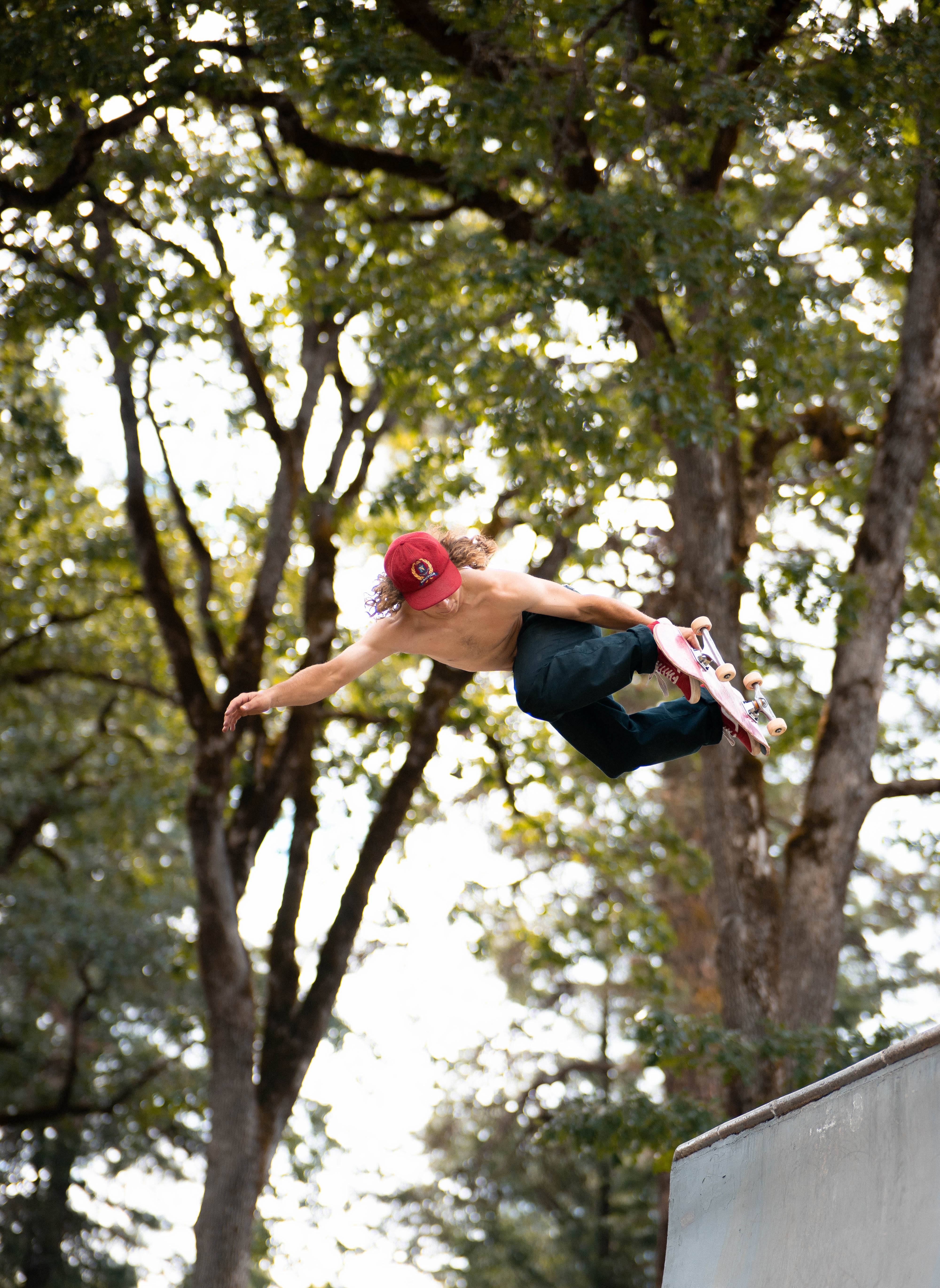
U.S. Snowboard Pro Team member Sean FitzSimons going large at the Hood River Skate Park in Hood River, Oregon. (Fenn Paider - @fennpaider/fennpaider.com)
We all know U.S. Snowboard Team athletes can ride on snow, but do these skills translate to other boardsports? Scanning athlete Instagrams this off-season sure would make you think so. Skateboarding, surfing, wakeboarding and wake surfing may not be mentioned word for word in their training regiments, but there are clear crossover skills and style that makes for a very pleasant Instagram viewing experience.
Although many riders skate for fun, U.S. Snowboard Halfpipe Pro Team Head Coach Rick Bower respects skateboarding’s heritage and sees the cross-training benefits of riding transition off the snow.
“Snowboarding has been and always will be directly influenced by skateboarding,” said Rick. “All of our tricks come from skateboarding and the snowboard halfpipe is the most obvious representation of that direct influence. The very best cross-training a halfpipe snowboarder can do is learn to skate transition, with the vert ramp being the holy grail of transition mastery. A vert ramp enhances the skills needed to be a world-class halfpipe snowboarder such as balance and manipulating the human body through the constantly changing curvature of a massive transition from vertical to horizontal.”
Skating is one thing, but what about taking the board to water? Six-time FIS Snowboardcross World Champion Lindsey Jacobellis feels surfing not only keeps her connected to the outdoors, but also offers a great workout.
“Getting in the water is so healing,” said Lindsey. “I love being out in nature, especially if I surf at first light and there are only a few people out. I find that surfing helps my cardio and also my upper body strength. It is a nice way to change up the routine a bit.”
What about wakeboarding? It’s not just gravity anymore. The use of a tow line adds another element to consider. Whether you are just carving or getting airborne, there is no letting go if you want to keep the flow. U.S. Snowboard Pro Team member Chris Corning recently picked up wakeboarding and shared his opinion on the similarities and differences to snowboarding.
“I have been wakeboarding a few times now and have been loving it,” he said. “The hardest part is learning how to use the rope. That can either be for passing it when spinning, the pull going up the wake on the boat, or jumps and rails on the cable. I really like wakeboarding to keep a board under my feet in the summertime!”
Meanwhile, U.S. Snowboard slopestyle and halfpipe rookie team member Fynn Bullock-Womble is a sponsored boat and cable wakeboarder who competes on a professional level. Although very different, Fynn feels the sports are complimentary.
The two disciplines are quite different,” said Fynn as he wrapped up a day on the boat. “Snowboarding is primarily lower body and wakeboarding is upper body. However, the edge control, air awareness, and balance established riding rails and features make the two sports very complimentary. I truly love all aspects of both sports and feel incredibly grateful to be able to pursue a career in both industries.”
The skatepark, the ocean, and the wake all offer U.S. riders what they need in the off-season - a chance to express themselves, have fun, and continue to build on their skill sets. Many people assume that these sports just come easy to U.S. Snowboard Team athletes, but just as they put time in on snow to dial in their competition runs, their work ethic translates to their off snow riding as well. It’s who they are, it’s in their DNA, and it is sure fun to watch.
Check out some of the action from the U.S. Snowboard Team this summer below. There’s no shortage of entertainment here, so be sure to check them out and follow for more content from U.S. Snowboard Team athletes.
At a mere 23-months-old, Morse made his first tracks skiing at Sugarloaf, Maine. His official hashtag #mooseontheloose is based on his childhood nickname "Moose."
Bryce Bennett
Bryce Bennett began skiing at the age of two, hailing from Olympic Valley, California, where he grew up shredding the terrain of Palisades Tahoe. Bennett was first named to the Stifel U.S.
Shiffrin, Wright Featured in the Associated Press
By Megan Harrod
June, 30 2020
The Associated Press recently interviewed newly-nominated Development Team athlete Bella Wright, who was an invitee with the U.S. Ski Team throughout the 2019-20 season and started in her career-first FIS Ski World Cup in Lake Louise, Canada. (Max Hall - U.S. Ski & Snowboard)
When the Land Rover U.S. Alpine Ski Team returned to snow recently at Official Training Site Copper Mountain, Colo., they didn't know what to expect. Colorado in early June, in one of the hottest summers to date?! But, the Copper Mountain and U.S. Ski & Snowboard staff pulled it off together, and it was a productive camp.
That feat caught the attention of the Associated Press' Pat Graham, a longtime partner of U.S. Ski & Snowboard, who was impressed, to say the least. He featured the camp in a recent article, entitled "Peak performers: Shiffrin, ski team return to snow for camp".
In his piece, Pat interviewed newly-nominated Development Team athlete Isabella "Bella" Wright, who was an invitee with the U.S. Ski Team throughout the 2019-20 season and started in her career-first FIS Ski World Cup in Lake Louise, Canada. Bella, who won the 2019-20 super-G NorAm title, was stoked to be back on snow in Copper.
“Being back skiing, on the snow, it just felt like home,” said Bella Wright, who made her World Cup debut last season. “It felt like we were back doing what we’re supposed to be doing.”
Head women's coach Paul Kristofic added that the training was vital, since the Team missed spring training due to COVID-19. "It's just great quality mileage in the bank," he said.
At a mere 23-months-old, Morse made his first tracks skiing at Sugarloaf, Maine. His official hashtag #mooseontheloose is based on his childhood nickname "Moose."
Bryce Bennett
Bryce Bennett began skiing at the age of two, hailing from Olympic Valley, California, where he grew up shredding the terrain of Palisades Tahoe. Bennett was first named to the Stifel U.S.
Dani Loeb on AL.com
By U.S. Ski & Snowboard
June, 27 2020
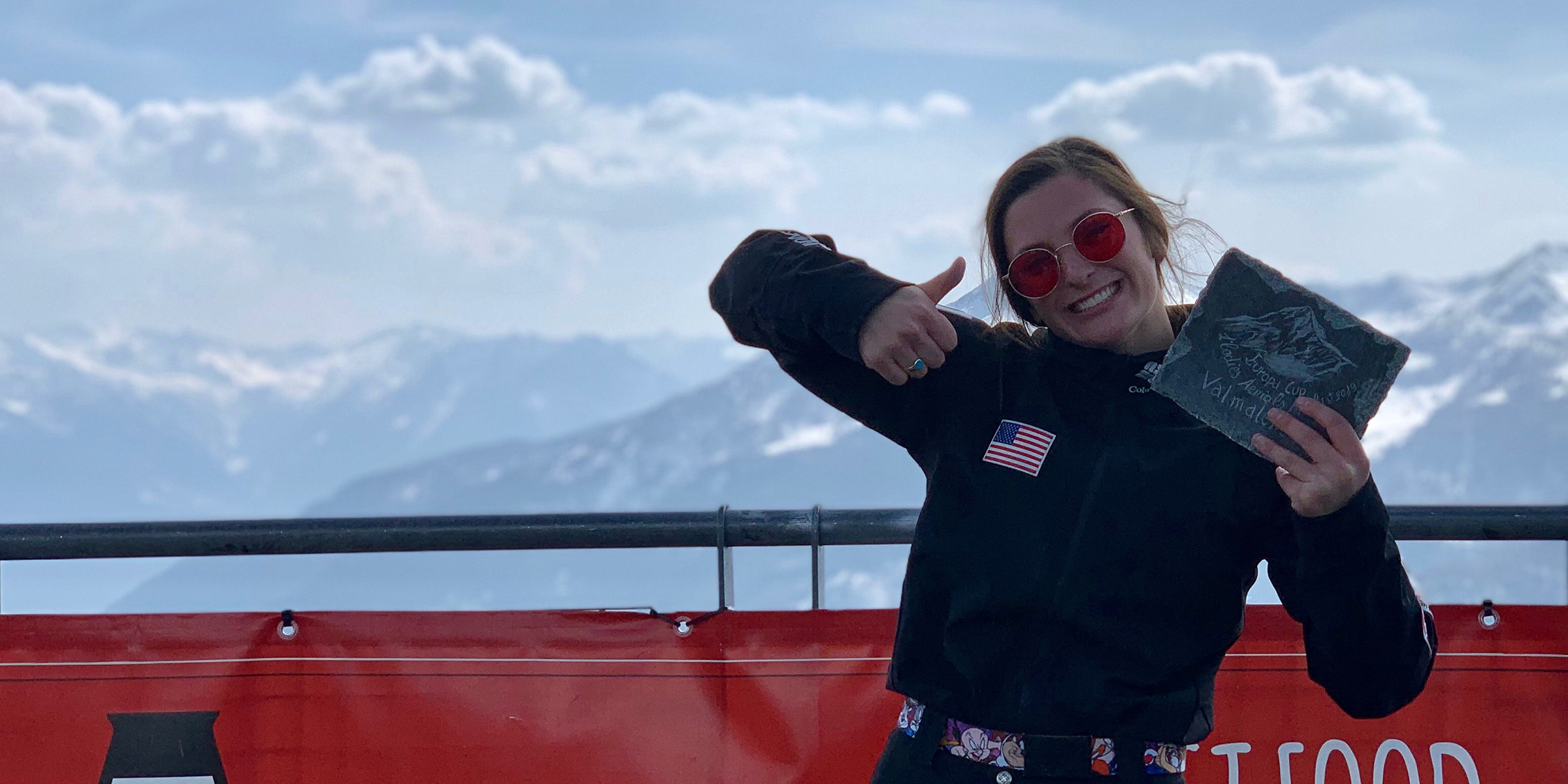
Dani Loeb won a Europa Cup event in 2019 in Chiesa in Valmalenco
From Alabama to aerial skiing, Dani Loeb shares her journey to the U.S. Aerials Team on AL.com.
When Dani Loeb was eight, she and her friends tried to build a snowman.
But the 1-inch snowfall, which was the first that Dani can remember in her hometown of Montgomery, wasn’t quite enough to form more than a snowball.
Ten years later, Dani, the girl who usually had to travel to see snow, is one of seven members of the women’s national Aerial Ski Team. Continue reading on AL.com
No Results Found
Land Rover U.S. Alpine Ski Team Wraps Up Successful Camp at Copper Mountain
By Megan Harrod
June, 22 2020
In early June, the entire women’s team, including A, B, C, and Development Teams, as well as the men’s Europa Cup team led by Matt Underhill, was able to return to the mountain in an unlikely location: Copper Mountain, Colo.—Official Training Site and home of the U.S. Ski Team Speed Center, where all athletes spend a significant amount of time in late October and November, heading into each FIS Ski World Cup season.
As Land Rover U.S. Alpine Ski Team athletes returned home early in mid-March from a shortened 2019-20 season, they were faced with a plethora of unknowns amidst the new normal that a global pandemic would provide. On the top of their list? Uncertainty around when they’d be able to return to the mountain and be able to do what they love so much: ski fast.
In early June, the entire women’s team, including A, B, C, and Development Teams, as well as the men’s Europa Cup team led by Matt Underhill, was able to return to the mountain in an unlikely location: Copper Mountain, Colo.—Official Training Site and home of the U.S. Ski Team Speed Center, where all athletes spend a significant amount of time in late October and November, heading into each FIS Ski World Cup season. The conditions were nothing short of incredible, and World Cup speed and tech athletes including Olympians Mikaela Shiffrin, Alice McKennis, Alice Merryweather, Breezy Johnson, Laurenne Ross, Jackie Wiles and more were singing Copper Mountain’s praises for the opportunity.
“It was amazing that Copper was able to pull it off. I think they were ready to flip the switch when the county let them, and they kept the hills in good shape and had plenty of snow up there,” said Head Women’s Coach Paul “PK” Kristofic. “Obviously, we wanted to capitalize on the very best options for snow and altitude and hill profile, and Copper was by far the best choice at this time of year, and it became available. We were super happy they were able to do it—it took a ton of effort from Frank Kelble and the Copper Mountain staff to get it done, and then our entire sports science team and all of the staff that were able to check off the boxes to ensure we were able to pull off a camp safely.”
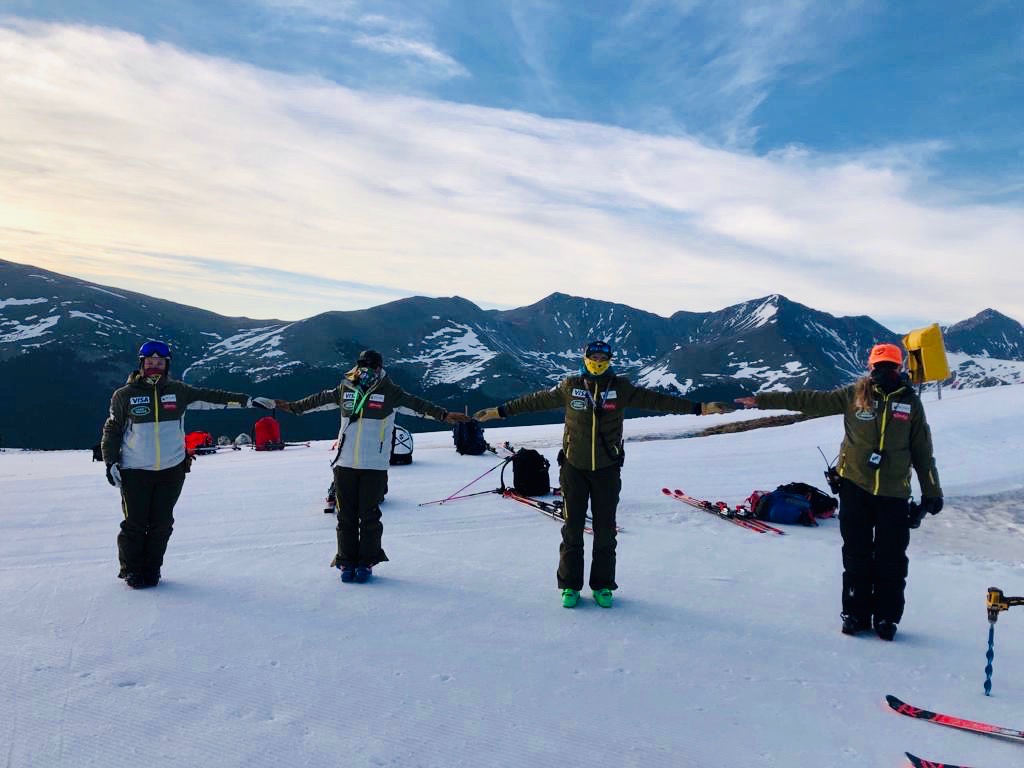
For Breezy, it was great to get back on snow and experience some sort of normalcy after the long break, “The precautions meant that we were a little more distant from our teammates than normal,” she commented. “I never realized quite how close we all were until we were literally required to stay away from each other. But luckily you need distance while you ski so things felt pretty normal in the course and on skis for the most part.”
In order to run safe camps, the U.S. Ski & Snowboard staff worked tirelessly to create and roll out a protocol to all athletes and staff returning to the mountain. This included minimizing contact with other training groups—including their teammates—and creating safe and small “team bubbles,” wearing masks, disinfecting workout equipment and any communal surfaces, distancing on the chairlift, and much, much more.
Despite all of the precautionary measures, World Cup technical skier and seven-time national champion Nina O’Brien was happy to be back on snow and admitted it wasn’t that different than normal. “It felt so good to be back on snow in Copper!” Nina exclaimed. “I’ve really missed skiing and my teammates these last months.”
“It was definitely a little strange to be social distancing on the mountain, but we all respected the rules and I felt totally safe returning to training,” she added. “Besides wearing face masks and sticking to our small training groups, it didn’t feel wildly different to be skiing with the COVID-precautions. Off the hill, the biggest changes we made were daily disinfecting of our condos, twice daily symptom monitoring, and changes to group workouts. I think our trainer Bob [Poehling] had the most difficult job of wiping down every piece of workout equipment between each person!”
For speed specialist Alice McKennis, returning to snow was sweet, especially considering it came sooner than she had expected. She said, “It was really exciting to get back on snow and much sooner than anyone anticipated! Throughout the spring I had heard of many different ‘plans’ that local ski clubs were trying to put in place to ski that kept getting shut down—so I had my hopes up several times this spring that I would be able to ski that never came to fruition until now! The first few free runs of just going fast and free without any focus were incredibly fun! Then to work…”
Speaking of work, PK said that the focus for all of the athletes was fundamental technical work. For the women’s speed team, that meant a focus on giant slalom. “We made a conscious decision to really put some effort into our GS training and technical training to improve the technical aspects of the speed team,” noted PK. “We decided that as a staff, and it’s just a really good opportunity to do that. So we’re able to work technical fundamentals with freeskiing, and then do a really good progression in giant slalom through this entire block of training to really implement those technical improvements into their GS gate training. That’s been the primary focus.”
On the tech side, there was about a 50/50 split of slalom and giant slalom with “a lot of technical, basic fundamental work at the start of camp.” Other than the skiing itself, one of the most exciting components of this camp was welcoming four-time Olympian and U.S. Alpine Ski Team alumnus and 2010 skicross Olympian Casey Puckett, who most recently was a FIS coach for Aspen Valley Ski & Snowboard Club (AVSC).
“A big target for this camp was the introduction of Casey Puckett as the Europa Cup coach, as he was leading the entire group since [World Cup Tech Team Head Coach] Magnus [Andersson] wasn’t there, so it was a chance for him to work with those athletes for the first time, work with Katie [Twible] for the first time, and get to know everybody,” added PK. “The camp was high volume slalom and GS, focused on technical adjustments and progression. It was nice there because you could start changing slopes, you could go across three different hills and change the profile to change the challenge so you’re not stuck on one hill all of the time with one profile. You could move around and match up your progression to the challenge of the hill, which was really good.”
U.S. Ski Team athletes were surprised by how good the training conditions were for June, and though they battled with some warm weather, the snow held up and allowed for productive training. “We started the camp with a progression of drills,” said Nina, “and eventually worked our way into normal slalom and GS courses. I was mainly focused on getting a good feeling back on my skis and strong body position.”
For Alice and Breezy both, the giant slalom training and honing in on the technical fundamentals made for a great start to the 2020-21 season prep period. “The conditions were great! We certainly had some ‘spring’ conditions a few days where the snow softened rather quickly but our staff worked super hard with salting and slipping to make it the best possible,” commented Alice. “Our last couple days of full-length GS were really good, some of the best and more challenging GS training I have had in a long time!” Breezy added, “I’ve been trying to improve the technical aspects of my speed skiing for some time so working on GS was a great time to get some of that done. I was working on being dynamic and moving throughout the turn and staying level over the outside ski.”
Coming off a challenging season in which Alice returned from a horrible leg injury, she said she changed up her focus and thought a lot about the notion of “skiing out”—“skiing the turn deep, then getting really strong pressure above the gate, while pushing my upper body out and away from the gate as I have a tendency to move my upper body inside which weakens the top of my turn. It was really just a different way for me to think about leveling my shoulders up and worked really well.”
The athletes are full of gratitude to everyone who was able to ensure they made a safe and productive return to the mountain, including the U.S. Ski & Snowboard staff, team manager, Copper Mountain staff, and beyond. Alice also passionately added, “HUGE thanks to Copper Mountain, the lift operators, ski patrollers, groomers, Frank Kelble, and much of the Team Summit crew that put so much work into getting everything ready and making skiing happen again! Our staff did an incredible job as well being short-staffed without any of our European staff—Karin [Harjo] was certainly the MVP and we are so grateful for the help from Kristina Revello for joining us this camp! It was pretty fun having an all women's crew I must admit...additional thanks to my husband Pat and Napa (Jonathan Wyant) for helping with the ski preparation! All in all, it was a huge effort to make this training camp happen and I know how grateful all of us are! After a strange few months, it was motivating and inspiring to get on snow again.”
Women's team athletes were treated to an almost entirely female staff, including Rocky Central Regional Coach Kristina Revello, women's speed team physio Torey Anderson, Assistant Europa Cup tech coach Katie Twible, and Assistant World Cup speed coach Karin Harjo.
In terms of what’s next, PK said: “We’re keeping all options open and we have multiple plans in place, and all of them are driven by our ability to travel and travel safely.” Currently, the women’s team has plans that are all domestic, plans that are based in Europe, and those in the Southern Hemisphere “which are definitely challenged at the moment.” He added, “The number one priority is to do it safely and number two is to be able to capitalize on the best training we can get safely, so that may turn out to be a domestic Mt. Hood program for the summer.”
U.S. Ski & Snowboard sanctioned training camp attendance is optional. U.S. Ski & Snowboard athletes and staff should not feel pressure to travel to train. All sanctioned training camp policies and protocols are subject to change based on local, state, and federal public health orders, updated guidance from the USOPC, or updated U.S. Ski & Snowboard policies.
Sam Morse
At a mere 23-months-old, Morse made his first tracks skiing at Sugarloaf, Maine. His official hashtag #mooseontheloose is based on his childhood nickname "Moose."
Bryce Bennett
Bryce Bennett began skiing at the age of two, hailing from Olympic Valley, California, where he grew up shredding the terrain of Palisades Tahoe. Bennett was first named to the Stifel U.S.
Proffit's Unlikely Path to U.S. Alpine Ski Team Featured in St. Louis Post-Dispatch
By Megan Harrod
June, 22 2020
Land Rover U.S. Alpine Ski Team Development athlete Ainsley Proffit was recently featured in the St. Louis Post-Dispatch's "Best of St. Louis" series, featuring the region's top performers in Olympic and recreational sports in an article entitled, "From St. Charles to U.S. ski team: Ainsley Proffit's unlikely quest to be queen of the hill."
Land Rover U.S. Alpine Ski Team Development athlete Ainsley Proffit was recently featured in the St. Louis Post-Dispatch's "Best of St. Louis" series, featuring the region's top performers in Olympic and recreational sports in an article entitled, "From St. Charles to U.S. ski team: Ainsley Proffit's unlikely quest to be queen of the hill."
“I remember my first year racing out in Colorado,” Proffit recalled. “I came out for Colorado’s end-of-season championships, where all best racers who were 11 or 12 years old all competed, all the best kids in the state. In the first race of the series I got second and one of the moms asked my mom where I was training. Did I go to Austria or Switzerland for special coaching? How was I so good from Missouri? It was me skiing at Hidden Valley every day.”